Buy Handmade Indian Art & Handicrafts Categories Online in India
5500+
Artisans Reached
5 Cr +
Revenue Generated
40+
Districts
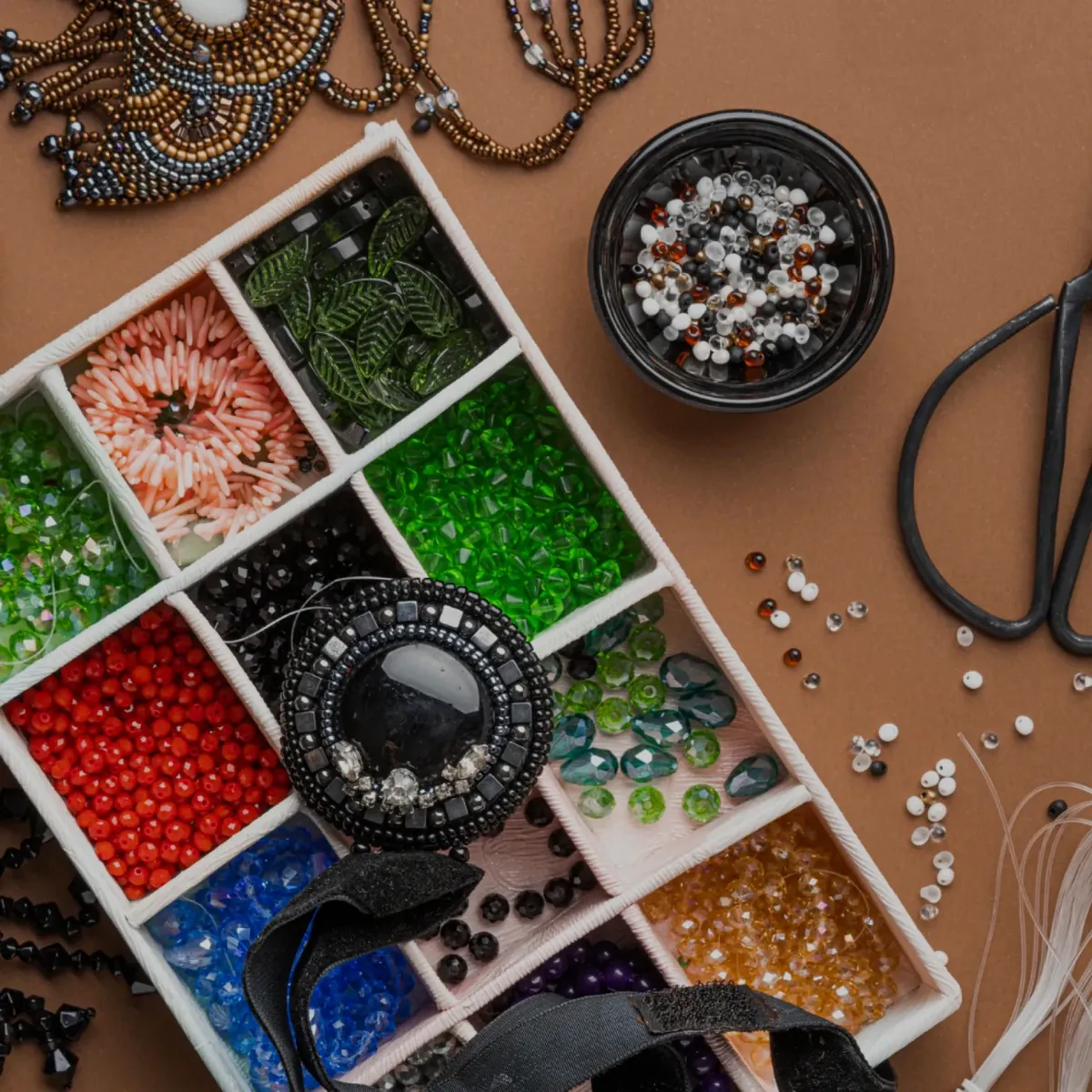
Bead Jewellery Craft
Rooted in ancient tribal traditions, bead jewellery began as adornment and spiritual symbolism, with techniques passed down orally through generations.
Fascinatingly, many pieces are still hand-strung using natural beads, shells, glass, and stones following centuries-old methods.The craft creates vibrant necklaces, bangles, earrings, and waist belts known for bold patterns and cultural motifs.It is valued for eco-friendly materials, complete handcrafting, and strong links to folk identity and ritual use.
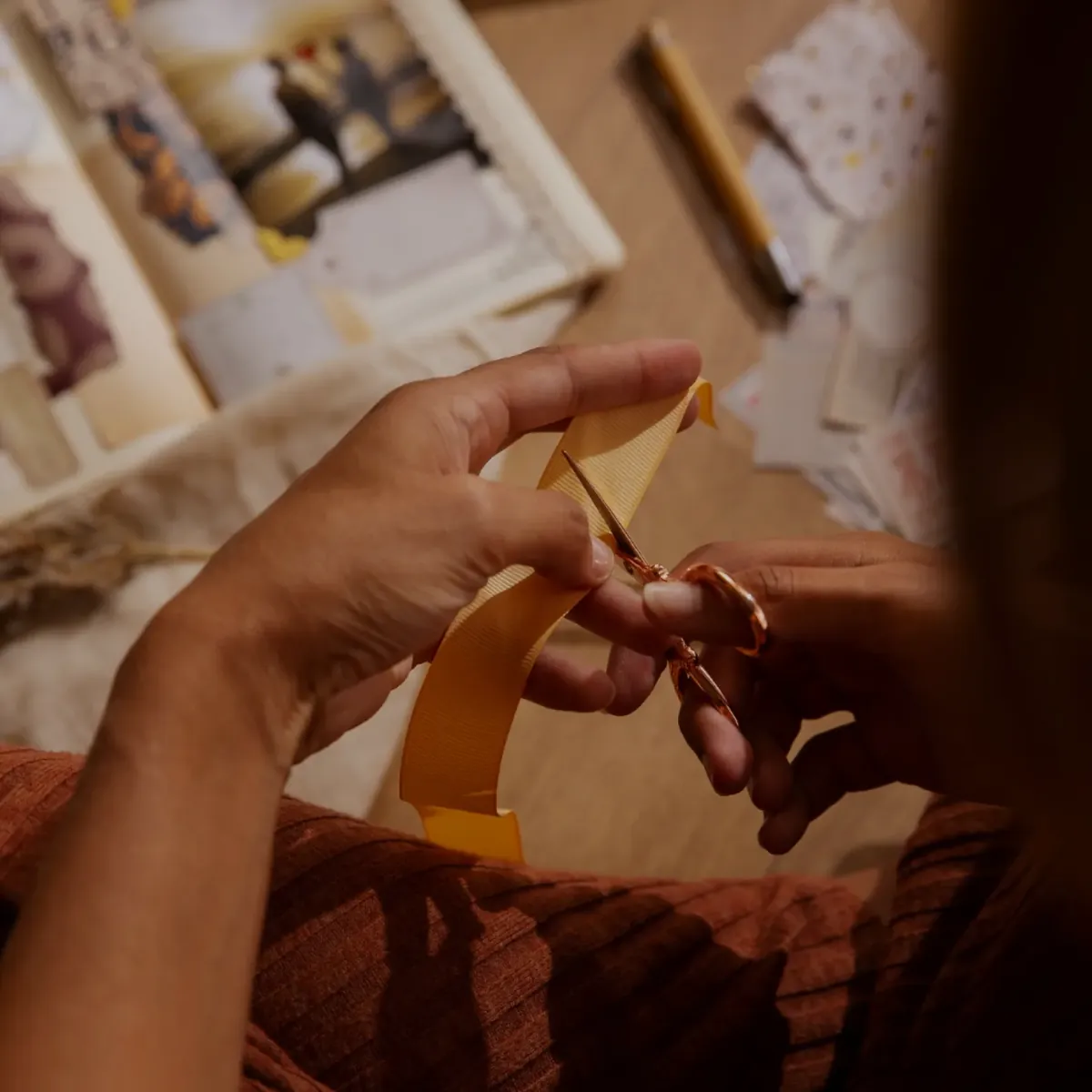
Handmade
Rooted in India’s age-old artisanal traditions, handmade crafts evolved as skilled family practices passed down through generations.
Fascinatingly, every piece reflects the maker’s individual hand rather than uniform machine production.The craft spans décor, textiles, utility items, accessories, and folk art created entirely through manual techniques.It is valued for authenticity, sustainability, and the preservation of traditional skills.Each handmade product supports artisan livelihoods while keeping cultural knowledge alive.These crafts also promote eco-friendly production with low-energy, low-waste processes.
Madhubani
Originating centuries ago in Mithila, Madhubani began as ritual wall art painted by women to celebrate festivals, marriages, and village life.
Fascinatingly, it survived only through oral tradition until the 1960s, when it gained global recognition as a formal art style. The craft features intricate line work and bold colours made from natural pigments, depicting mythology, nature, and daily life. It is unique for its fully hand-drawn, border-filled compositions with no empty spaces and strong symbolic storytelling. GI-tagged as Madhubani Painting of Mithila, Bihar.
Chikankari
Believed to have originated in Mughal-era Lucknow, Chikankari evolved as a royal embroidery tradition blending Persian elegance with Indian craftsmanship.
Fascinatingly, the craft involves up to 40 distinct hand stitches, each adding delicate texture to lightweight fabrics. It is known for its subtle white-on-white embroidery featuring floral and paisley motifs on cotton, muslin, and silk. The craft is prized for fine needlework, breathability, and timeless elegance that suits both traditional and modern wear.
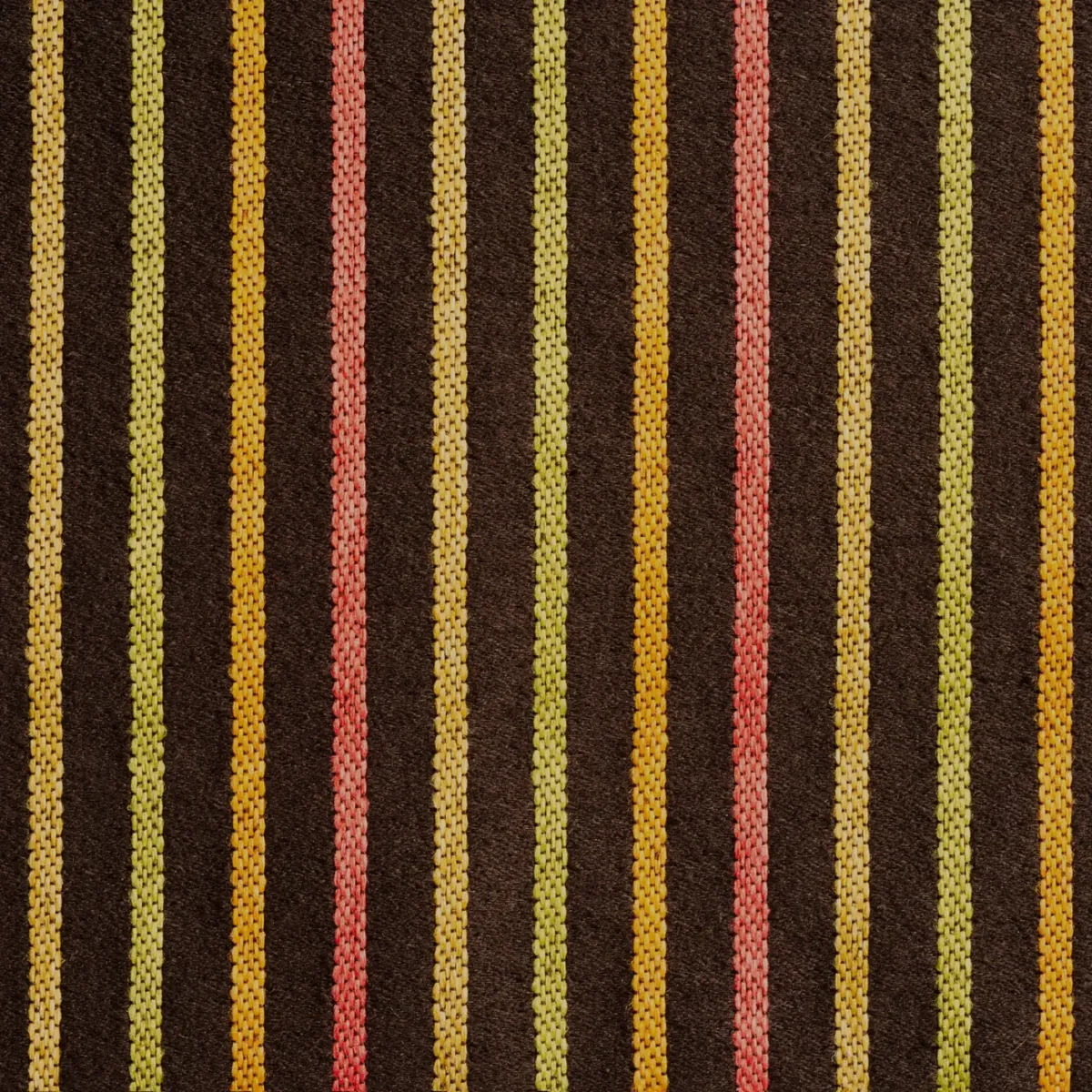
Barabanki Weaves
Rooted in Awadh’s handloom heritage, Barabanki weaving grew as a rural cottage craft supporting royal courts and local markets for centuries.
Fascinatingly, the region became known for ultra-fine cotton and blended fabrics woven on traditional pit looms by family clusters.The craft produces sarees, dupattas, stoles, and yardage with soft textures and subtle woven patterns.It is valued for lightweight comfort, durability, and meticulous handloom workmanship free from mechanized processes.
Sustainable
Rooted in traditional village practices, sustainable craft evolved from using local natural resources with minimal waste.
Fascinatingly, many crafts rely on upcycling agricultural byproducts, natural fibers, and recycled materials.The craft produces home décor, baskets, textiles, and lifestyle goods through low-energy hand processes.It is valued for eco-friendly sourcing, zero-waste principles, and support of rural artisan livelihoods.These crafts emphasize biodegradable materials and non-toxic natural dyes.
They help preserve traditional skills while promoting responsible consumption.
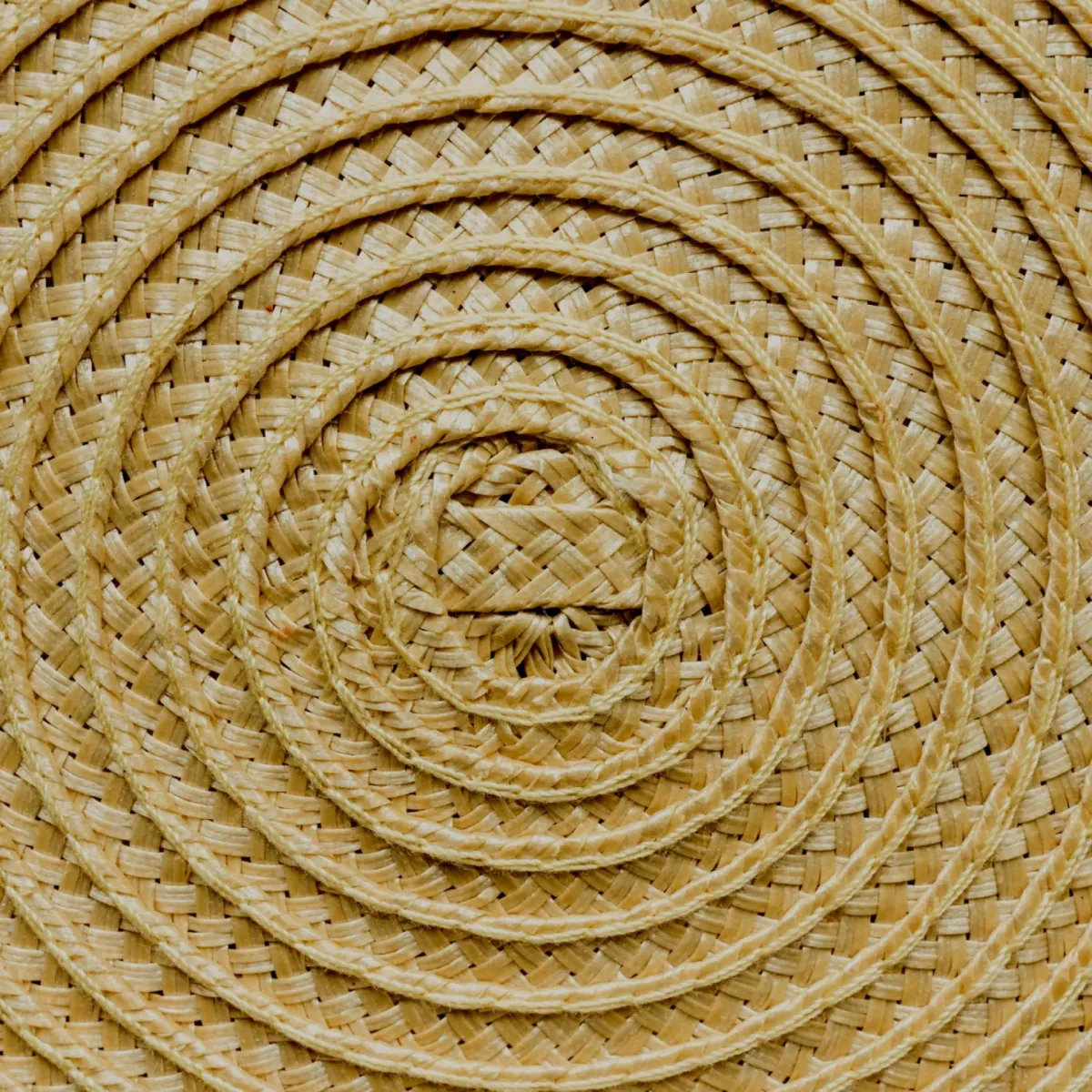
Wheat Grass
Emerging from recent rural innovation in Rajasthan, wheat grass craft developed by repurposing post-harvest stalk waste into decorative art.
Fascinatingly, every piece showcases natural golden hues without dyes, relying purely on the grass’s organic colour.The craft produces baskets, lamps, wall décor, and utility items through hand-twisting, coiling, and stitching techniques.It is valued for upcycled materials, environmental sustainability, and lightweight yet sturdy construction.
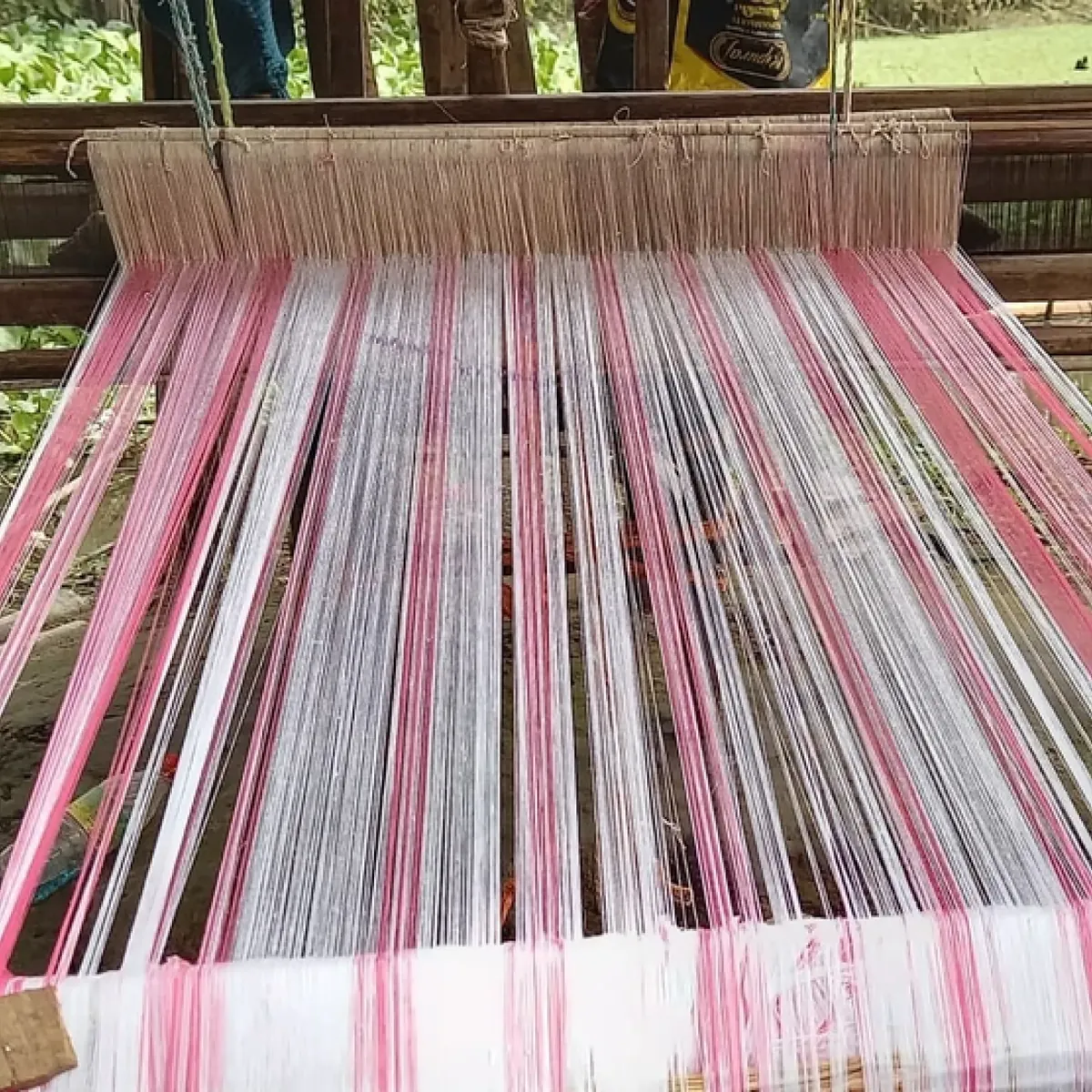
Taat Weaving
Taat weaving traces back to Bengal & Assam's rural weaving traditions, where sturdy jute mats were crafted for daily use and ceremonial seating.
Fascinatingly, these mats were once rolled and offered in temples and royal gatherings as symbols of respect and hospitality.The craft weaves sun-dried jute fibers into durable mats, floor coverings, and wall panels using wooden handlooms.It is valued for eco-friendly materials, natural textures, and its sustainable, chemical-free production process.
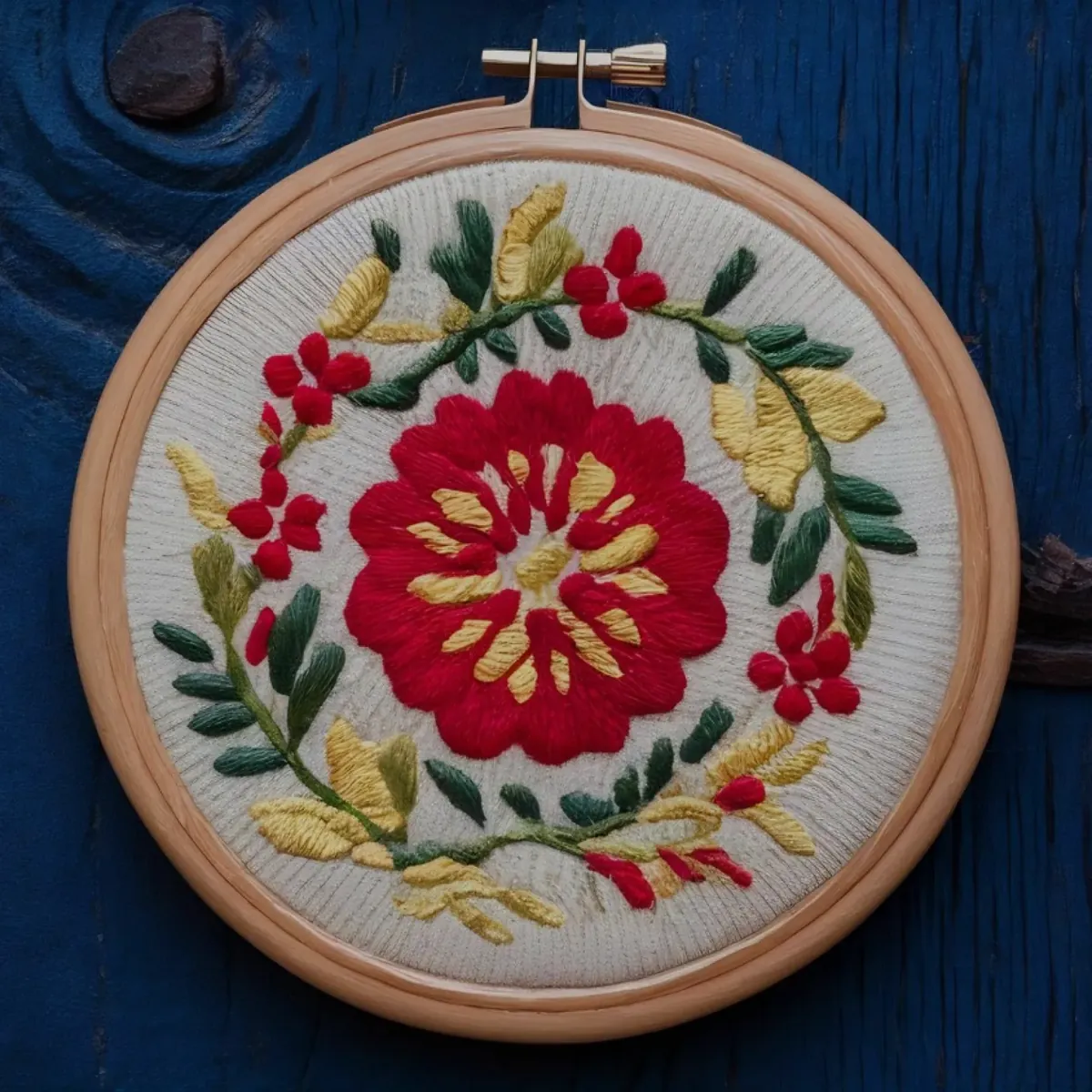
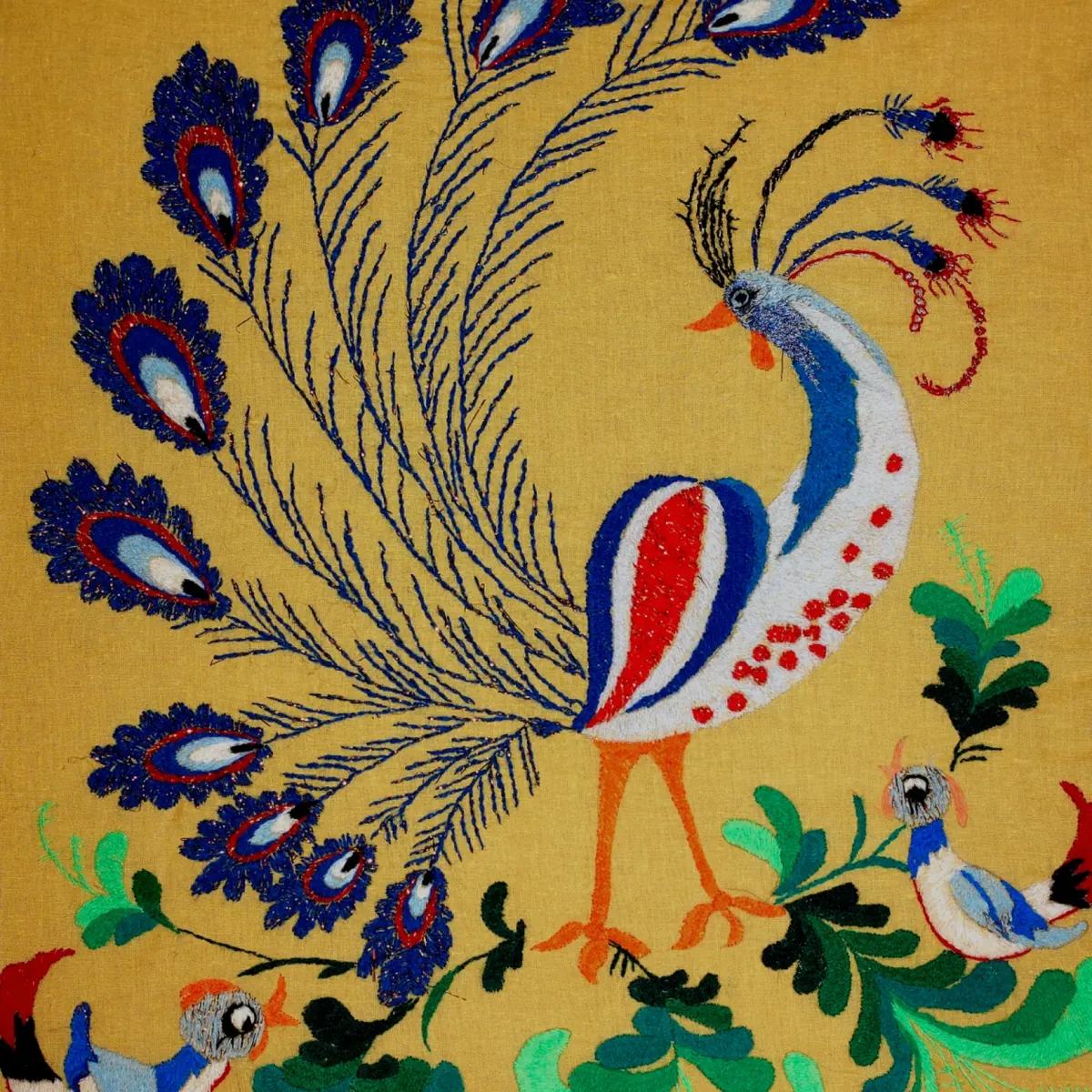
Embroidery
Tracing back thousands of years, embroidery developed as a decorative needle art for royal courts and community attire.
Fascinatingly, each region formed its own stitch language, patterns, and symbolic motifs.
The craft produces garments, wall hangings, cushion covers, and accessories with detailed hand-stitched work.It is valued for labor-intensive techniques, layered textures, and expressive surface design.Embroidery continues to evolve as artisans blend heritage stitching with modern fashion aesthetics.It plays a key role in sustaining home-based livelihoods, especially among women artisans.
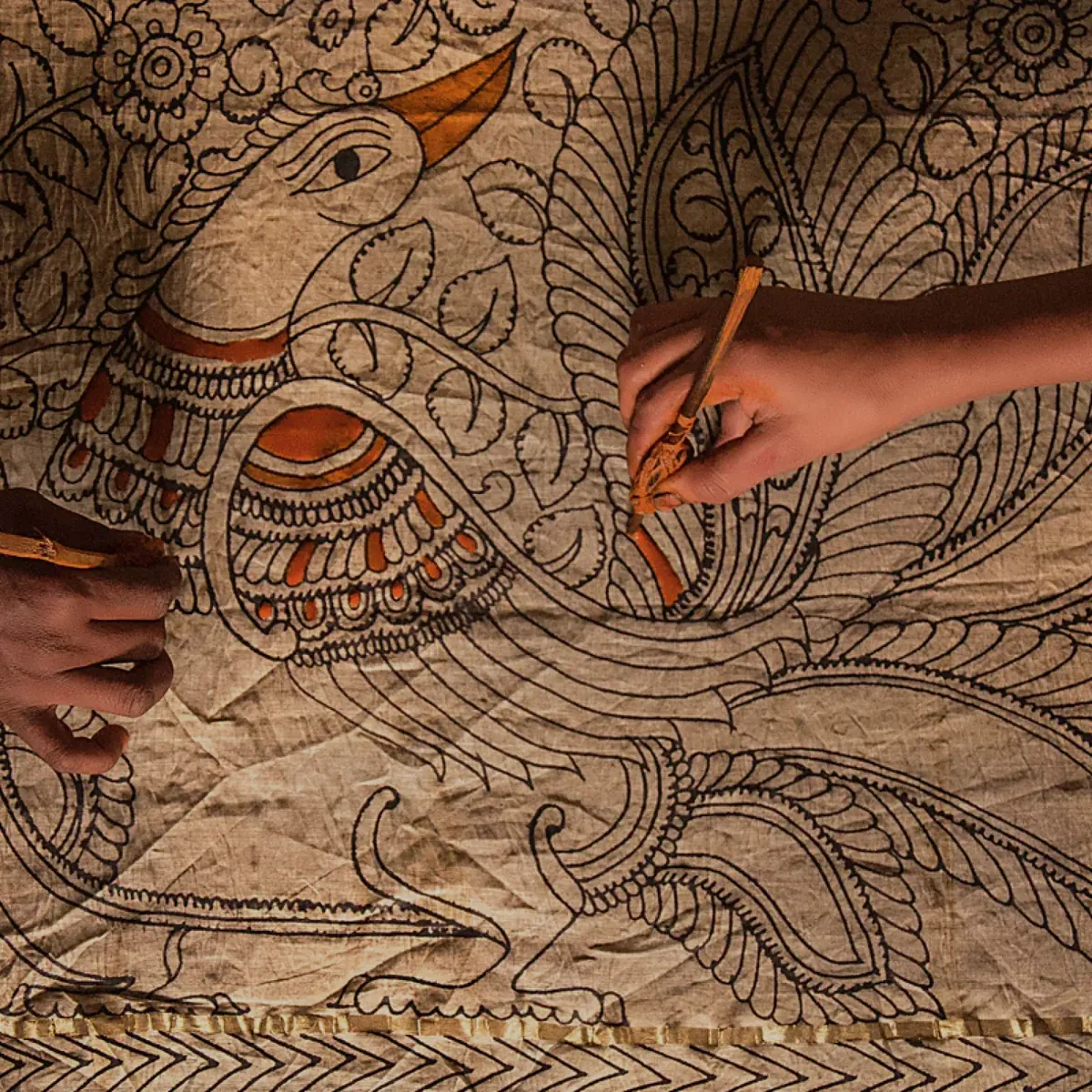
Kalamkari
Dating back over 3,000 years, Kalamkari evolved as a temple storytelling art painted by hand to depict epics and folklore.
Fascinatingly, each piece undergoes up to 23 labor-intensive steps using natural dyes and vegetable mordants.The craft creates hand-painted or block-printed textiles featuring mythological and floral narratives.It is valued for intricate freehand detailing, eco-friendly processes, and rich cultural storytelling.
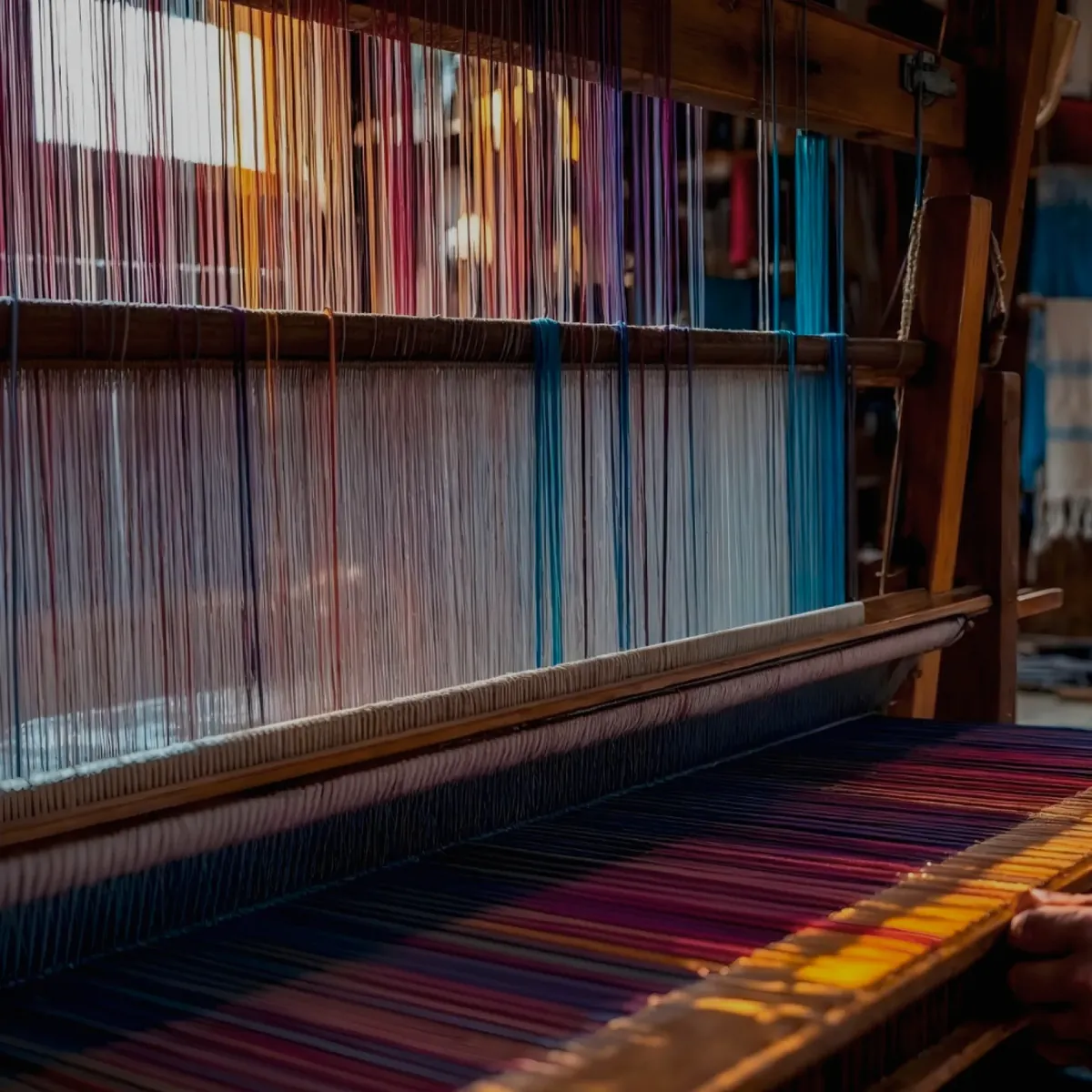
Handloom
Rooted in India’s ancient weaving heritage, handloom developed as a community-based textile tradition passed through generations.
Fascinatingly, many loom techniques in use today trace their lineage back centuries with little mechanical change.The craft produces sarees, shawls, fabrics, garments, and home textiles entirely woven by hand.It is valued for sustainable production, precision weaving, and region-specific patterns.Handloom supports millions of rural artisans and preserves indigenous textile knowledge.The craft adapts continuously to contemporary designs while maintaining traditional methods.
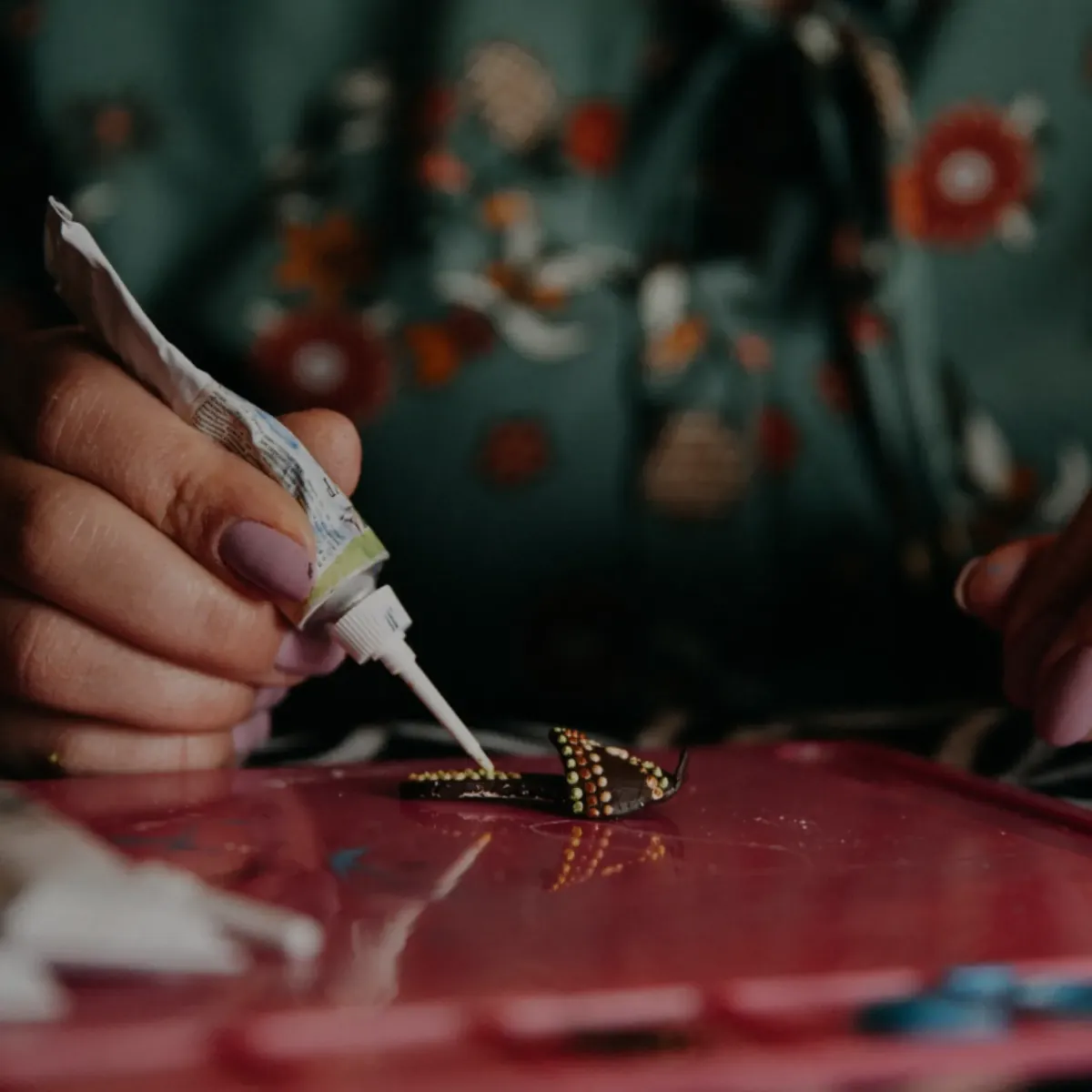
Leather Puppetery
Tracing back over a thousand years, leather puppetry grew as a traveling storytelling tradition used to perform epic tales and folklore.
Fascinatingly, puppets are made from translucent deerskin or goatskin, allowing vibrant colour projections during shadow performances.The craft produces jointed puppets dyed with natural pigments and detailed hand-cut patterns.It is valued for combining leather artistry, theatre, music, and narrative into a single cultural form.
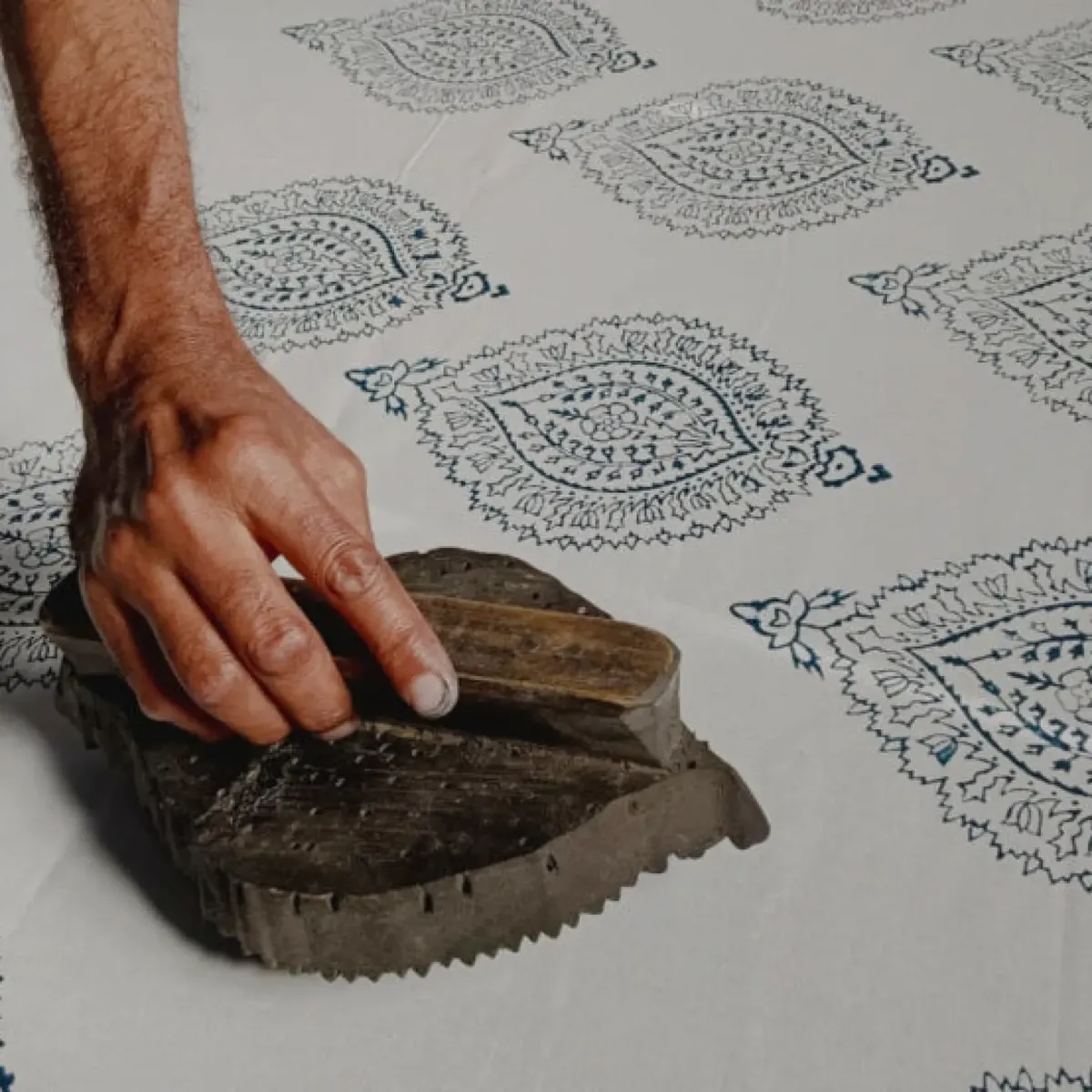
Block Print
Dating back over 2,000 years, block printing evolved as a textile storytelling craft using hand-carved wooden blocks to imprint textiles.
Fascinatingly, a single fabric design may require dozens of perfectly aligned block impressions by skilled master printers.The craft creates patterned cottons using natural dyes and traditional resist techniques.It is valued for precise handwork, eco-conscious processes, and timeless repeat motifs.
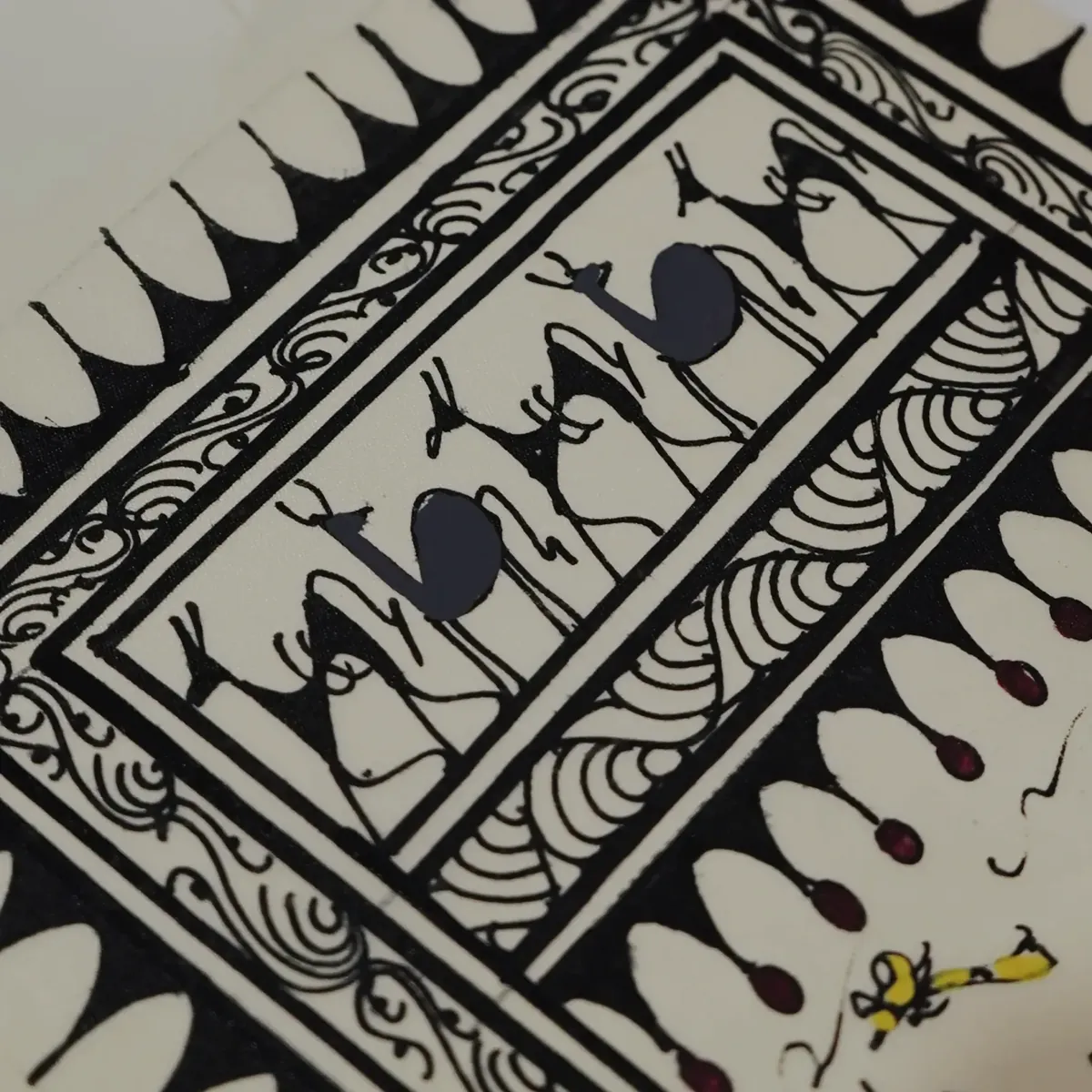
Pattachitra
Over a thousand years old, Pattachitra developed as a temple art tradition illustrating stories of Lord Jagannath and Hindu epics.
Fascinatingly, artists still prepare their own natural colours from shells, stones, and leaves using secret family formulas.The craft features finely detailed paintings on treated cloth with bold lines and ornate borders.It is valued for meticulous brushwork, mythological storytelling, and fully natural materials.
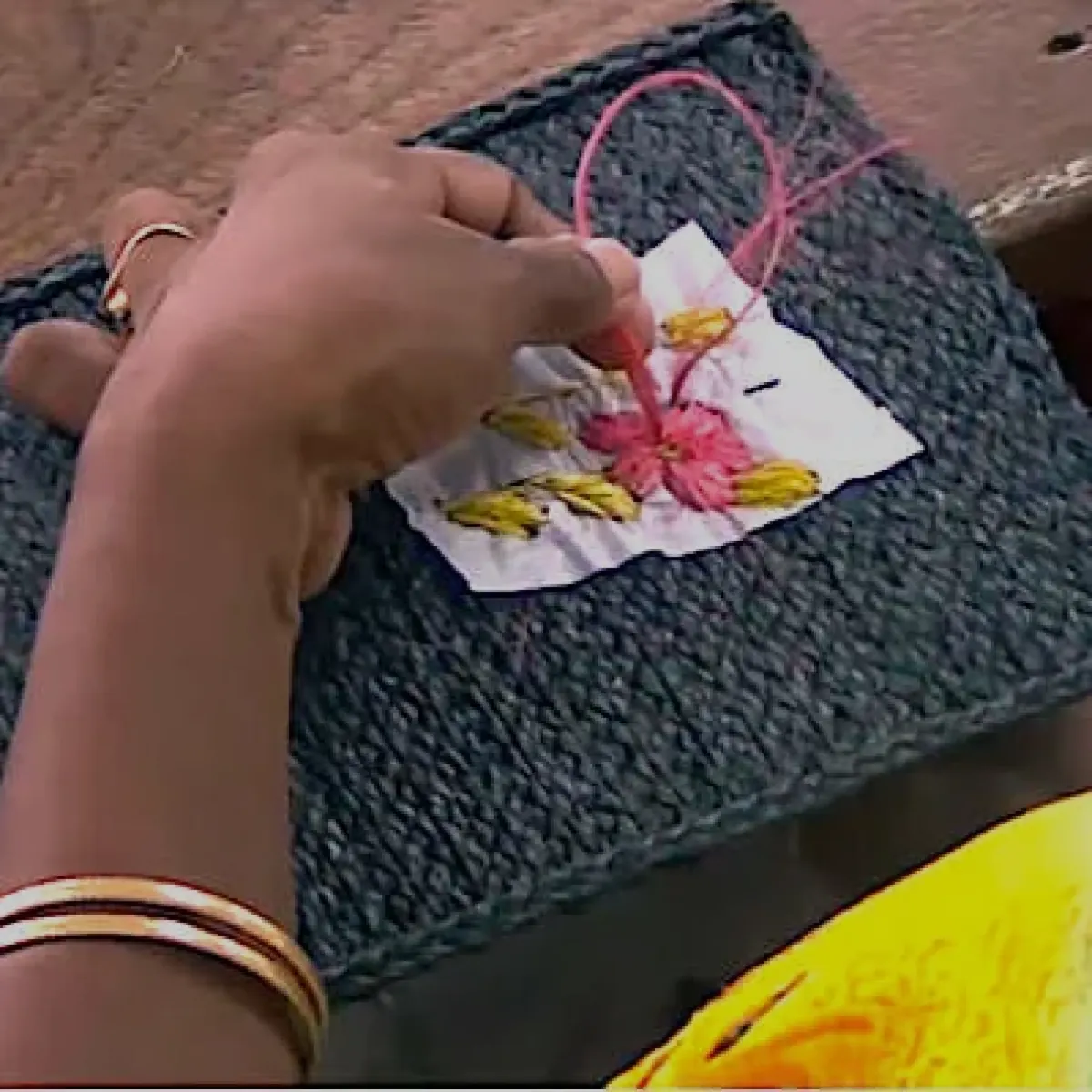
Banana Fibre
Originating from traditional rural recycling practices, banana fibre craft developed as a way to turn agricultural waste into useful art.
Fascinatingly, fibres extracted from banana stems are naturally lustrous and as strong as silk.
The craft produces textiles, baskets, bags, rugs, and décor items using hand-spinning and weaving methods.It is valued for sustainability, biodegradability, and its lightweight yet durable texture.
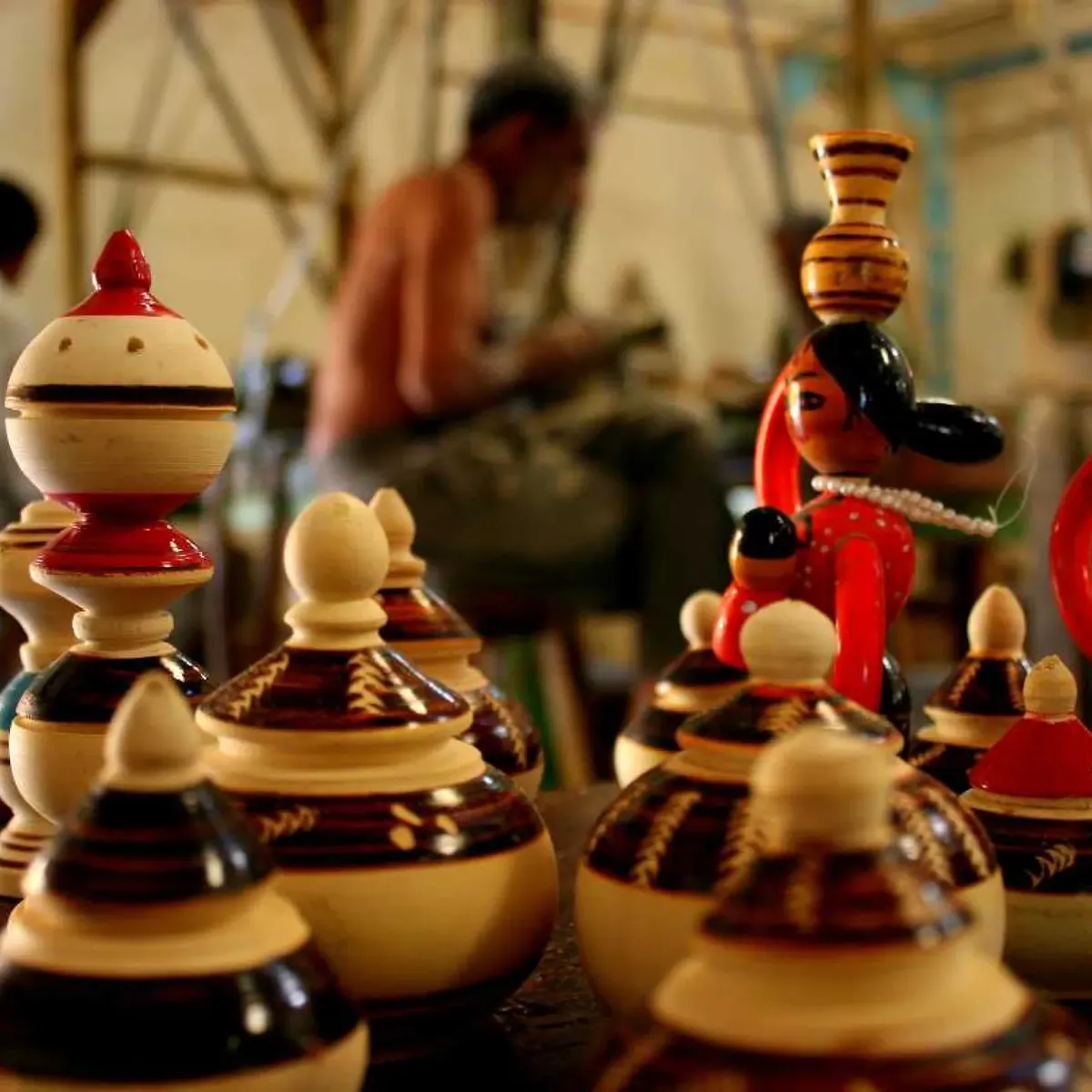
Channapatna
Dating back over 200 years, Channapatna toy-making began when Persian artisans taught local craftsmen lacquer-turning techniques under royal patronage.
Fascinatingly, toys are colored using natural vegetable dyes and polished with shellac for a safe, glossy finish.The craft produces hand-turned wooden toys, dolls, and décor made from sustainably sourced hale wood.It is valued for child-safe materials, smooth craftsmanship, and bright traditional designs.
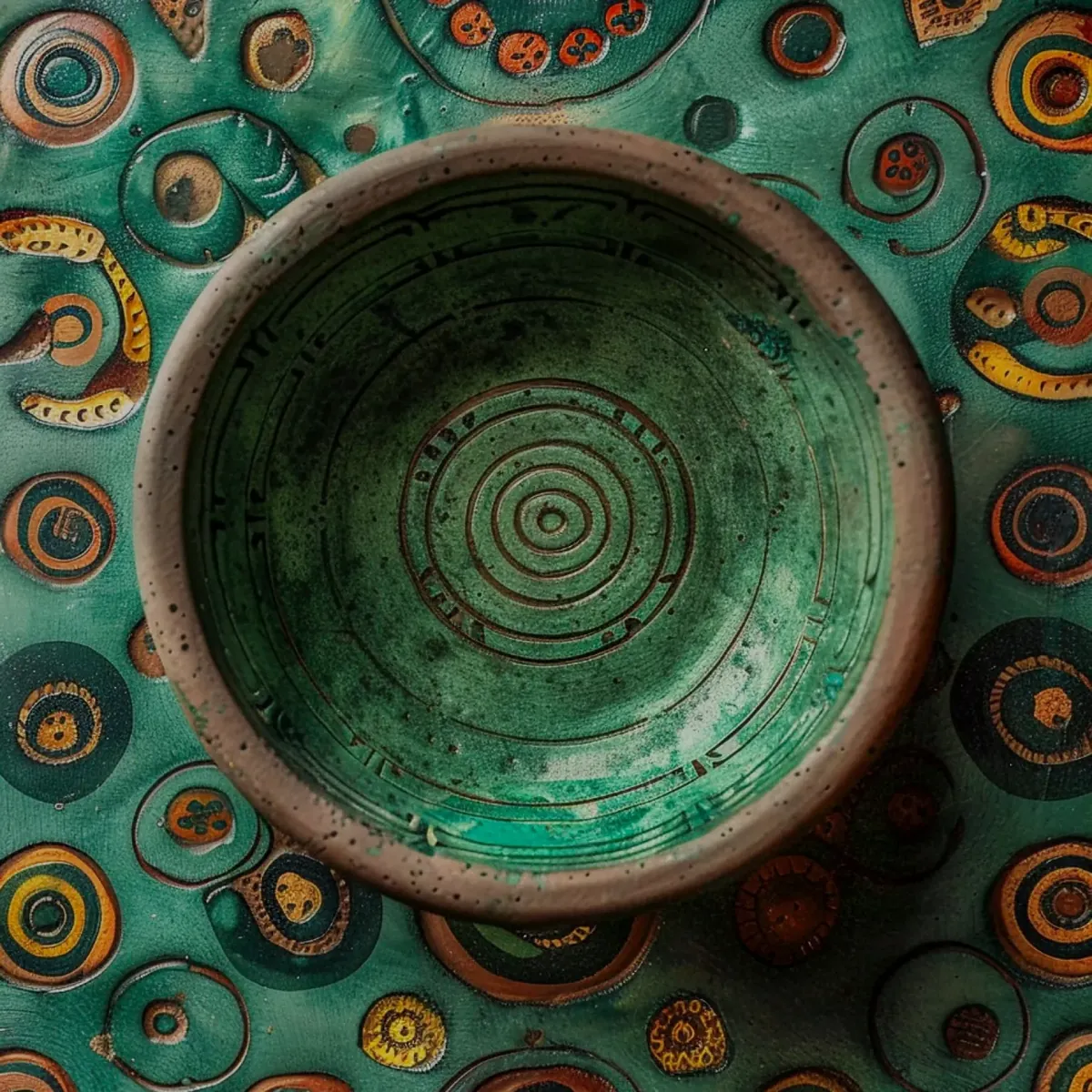
Terracotta
Originating in the earliest Indian civilizations, terracotta developed as a primary medium for ritual objects and everyday pottery.
Fascinatingly, some techniques used today mirror methods dating back to the Indus Valley period.
The craft produces idols, cookware, planters, décor pieces, and architectural elements.
It is valued for natural clay materials, low-energy firing, and earthy aesthetics.GI-tagged for preserving region-specific hand-molding and firing traditions maintained by artisan communities.
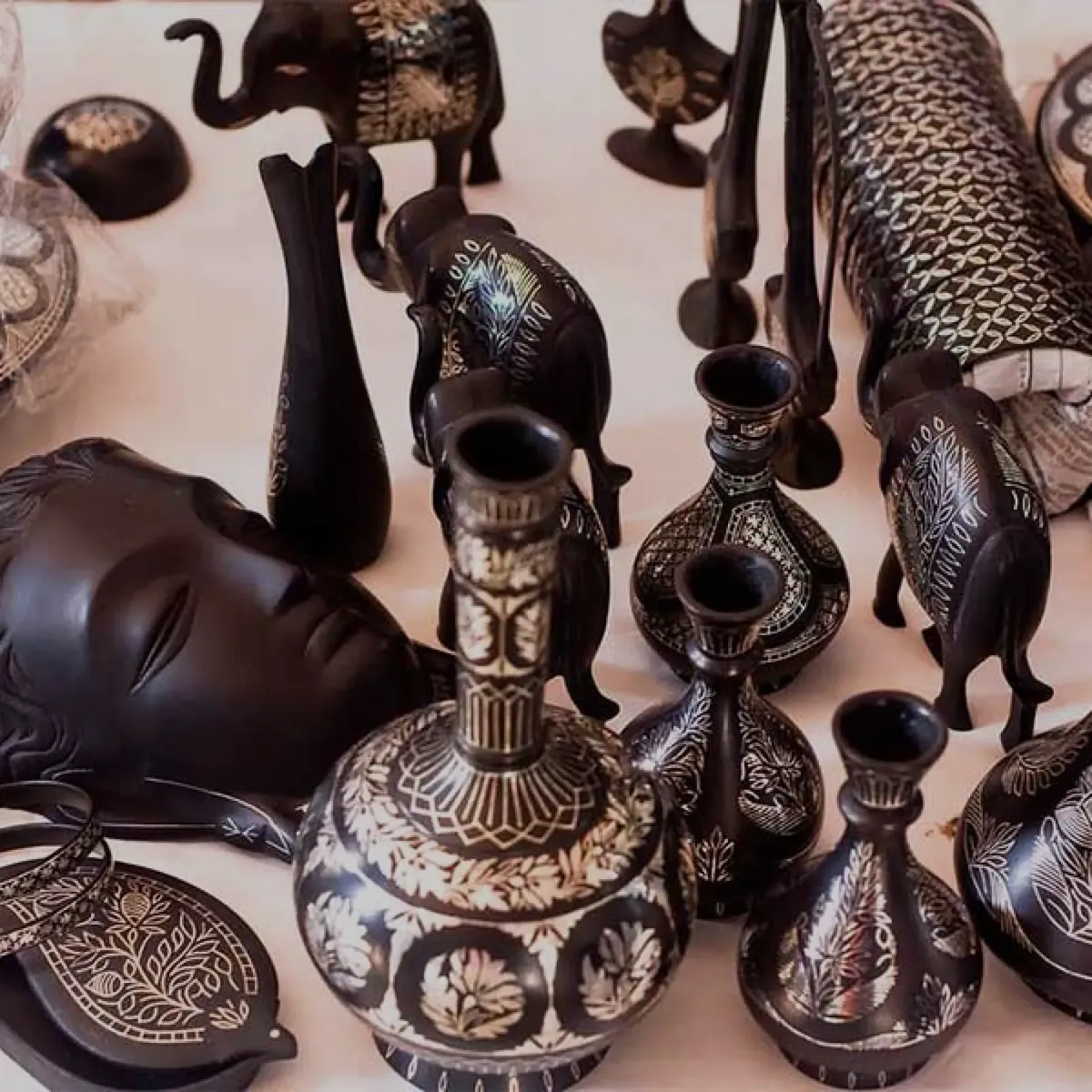
Bidri
Originating over 600 years ago under Deccan Sultanate patronage, Bidri developed as a luxury metal inlay art.
Fascinatingly, its deep black shine is achieved using soil found only near the Bidar fort area.
The craft creates zinc alloy vessels and décor inlaid with pure silver or brass designs.
It is valued for its dramatic black-and-silver contrast and highly detailed geometric and floral patterns.Each piece undergoes hand casting, engraving, inlaying, and a rare oxidation process unique to the region.Today, Bidri stands as a GI-tagged heritage craft admired in museums and global décor markets.
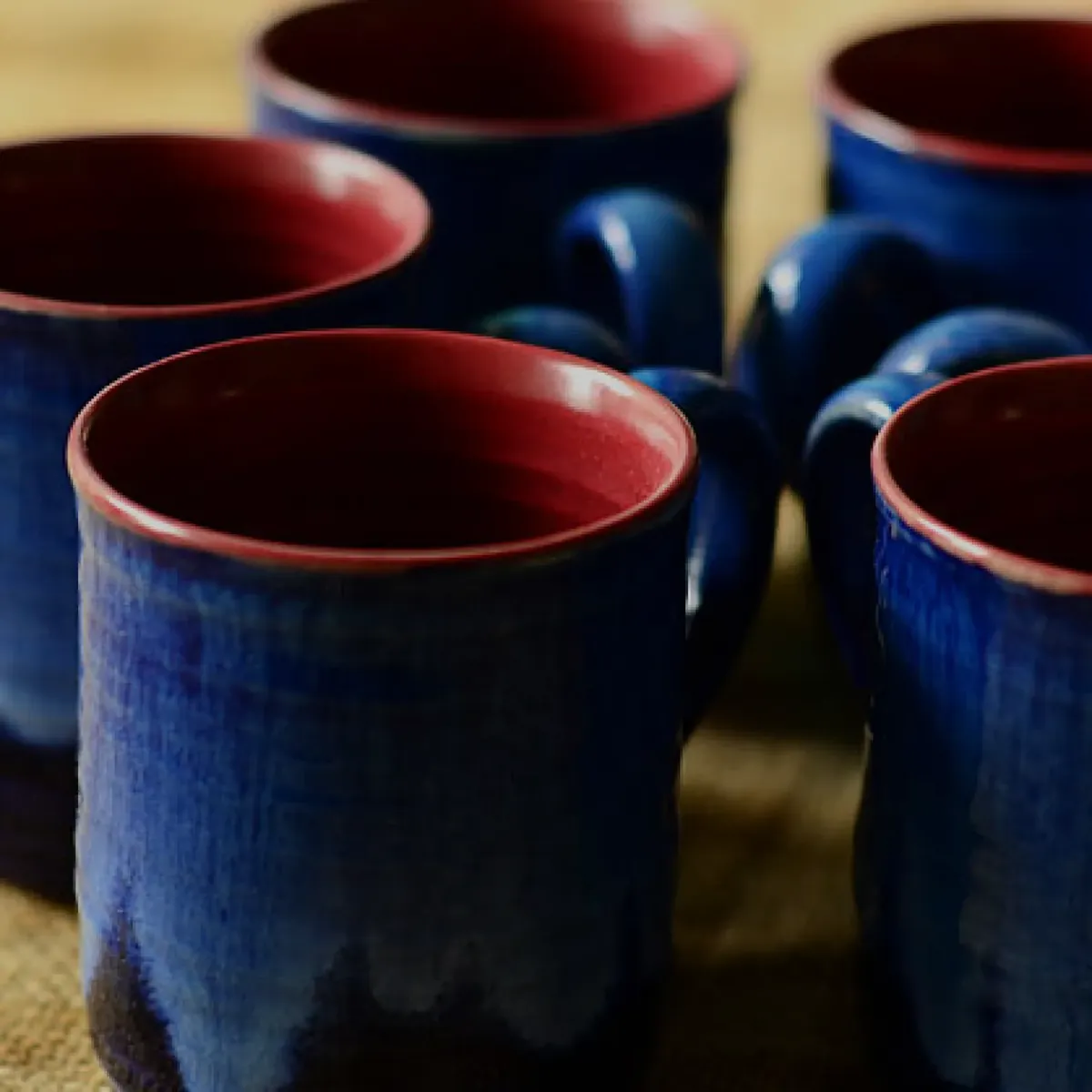
Khurja Pottery
Dating back over 600 years, Khurja pottery flourished under Mughal influence as a major center of glazed ceramic art.
Fascinatingly, the town earned the title “Ceramics City of India” due to its dense clusters of traditional kilns.The craft produces colorful tableware, tiles, planters, and décor using hand-molding and painting methods.It is valued for vivid glazes, floral and geometric motifs, and durable craftsmanship.GI-tagged for its centuries-old ceramic techniques and region-specific glaze styles passed through artisan families.
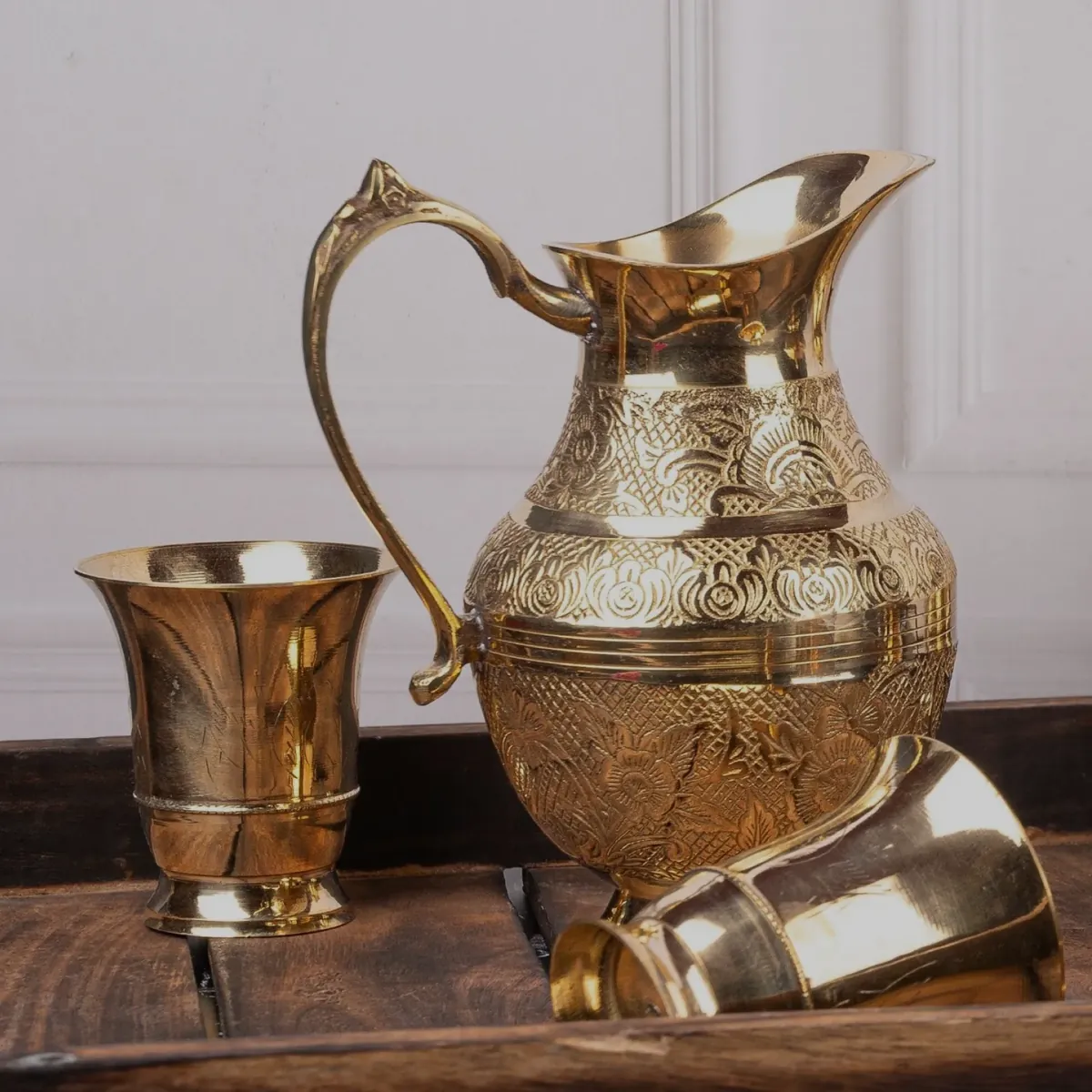
Brass Metal Craft
Rooted in ancient Indian metallurgy, brass craft thrived under temple and royal patronage for ritual vessels and décor.
Fascinatingly, artisans still use age-old casting methods like lost-wax to create seamless hollow forms.The craft produces lamps, idols, utensils, and home décor with hand-engraved detailing.
It is valued for durability, warm golden tones, and intricate surface ornamentation.GI-tagged for preserving region-specific casting skills and distinctive traditional design techniques.
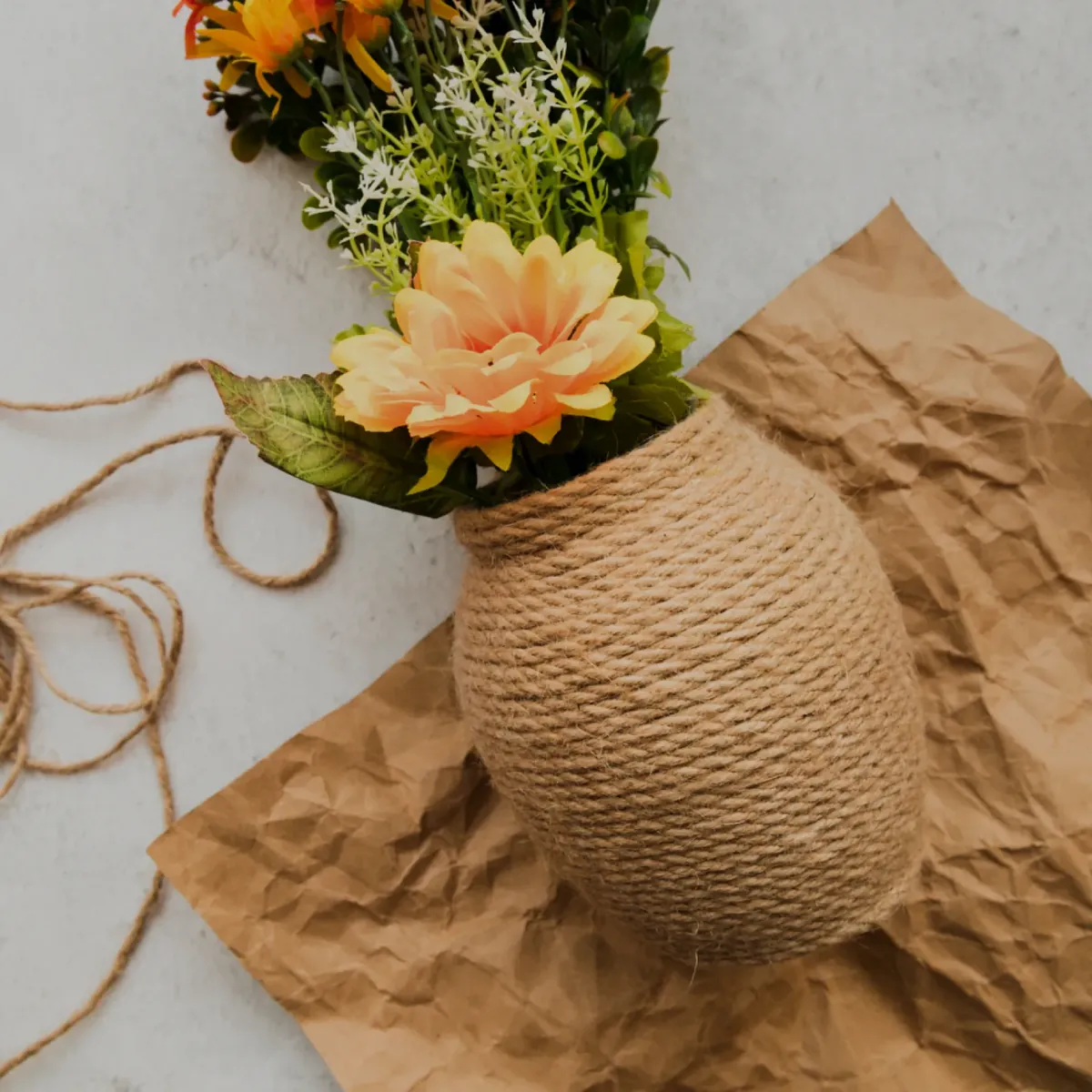
Jute Craft
Emerging from Bengal’s agrarian traditions, jute craft developed as a way to transform natural fiber into utilitarian and decorative items.
Fascinatingly, jute is known as the “golden fiber” for its biodegradability and natural sheen.
The craft produces bags, rugs, wall décor, baskets, and lifestyle accessories through hand-weaving and knotting.It is valued for sustainability, strength, and its rustic yet contemporary aesthetic.GI-tagged for safeguarding traditional jute processing and weaving techniques unique to the region.

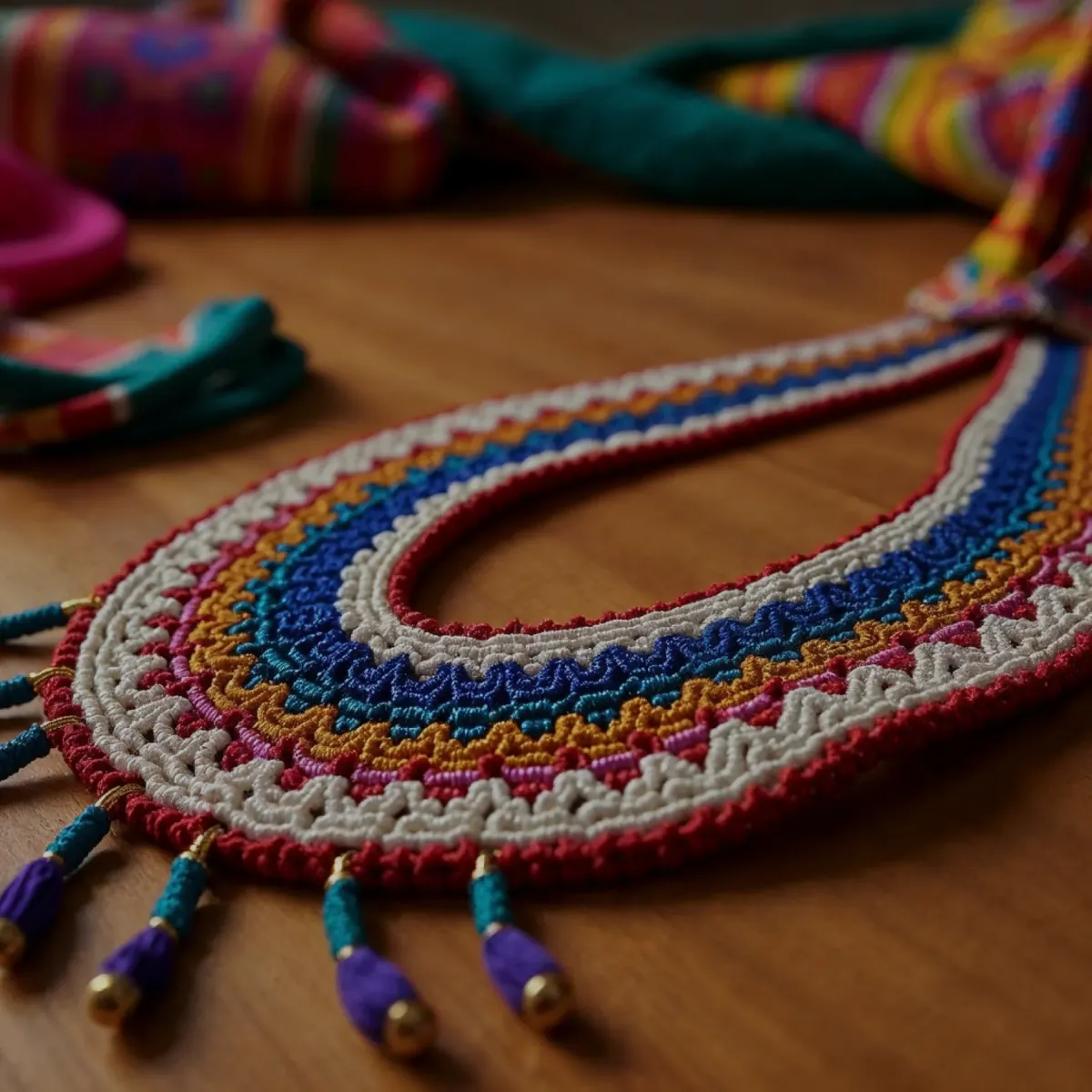
Crochet Craft
Introduced during colonial times, crochet evolved into a home-based artisan tradition adapted into Indian textile culture.
Fascinatingly, many regional artisans blend Western crochet patterns with indigenous motifs and color palettes.The craft creates lace, garments, toys, accessories, and home décor using hand-looped yarn techniques.It is valued for precision handwork, versatility of design, and soft textural appeal.
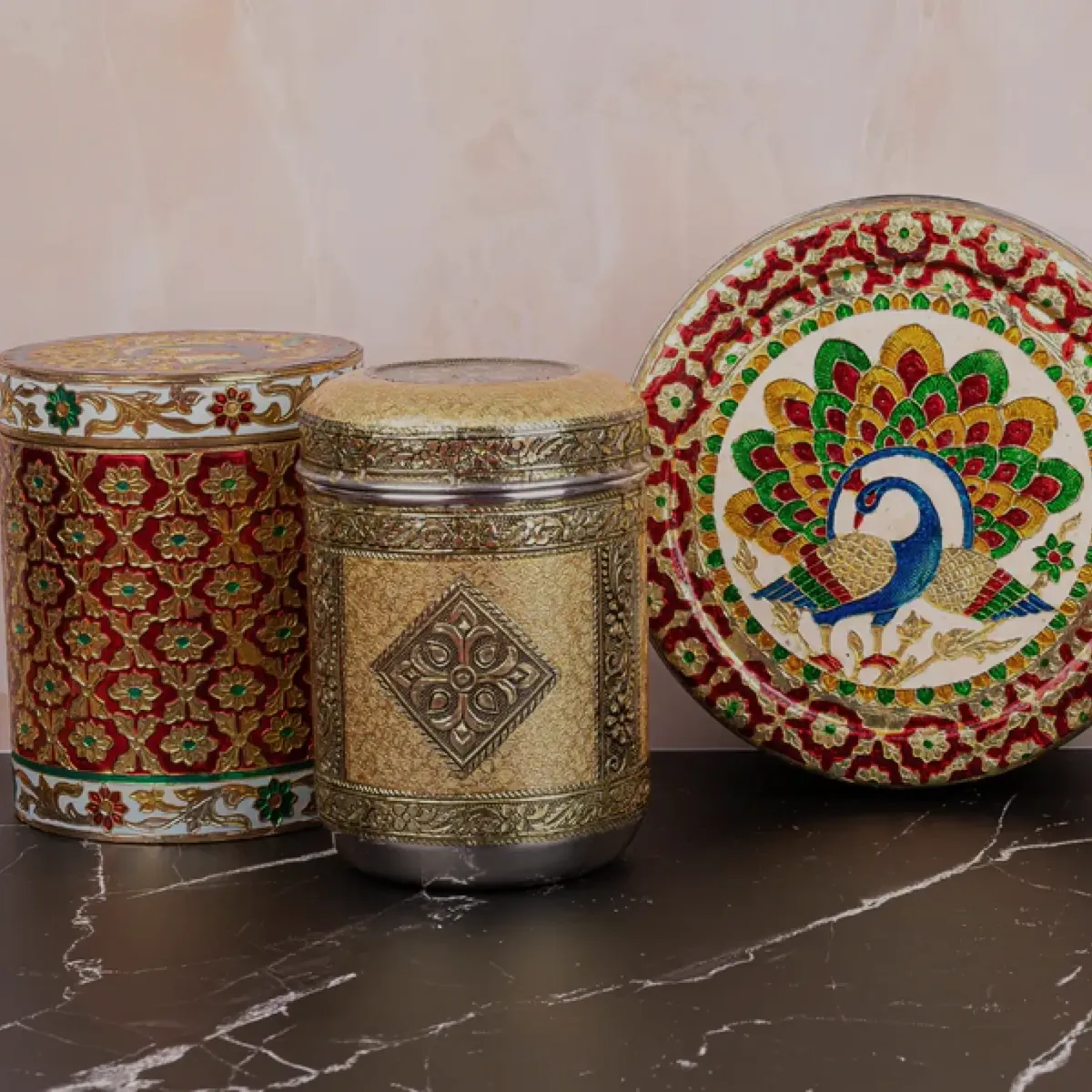
Marble Meenakari
Developed in Mughal-era Rajasthan, marble meenakari blended gemstone inlay traditions with enamel painting techniques.
Fascinatingly, artisans paint vivid motifs freehand on marble, then kiln-fire each piece to fuse the colors permanently.The craft decorates statues, vases, trays, and tabletops with floral and miniature-style designs.It is valued for its jewel-like finishes, meticulous detailing, and combination of stone with enamel art.GI-tagged for preserving its region-exclusive marble enameling process refined over generations.
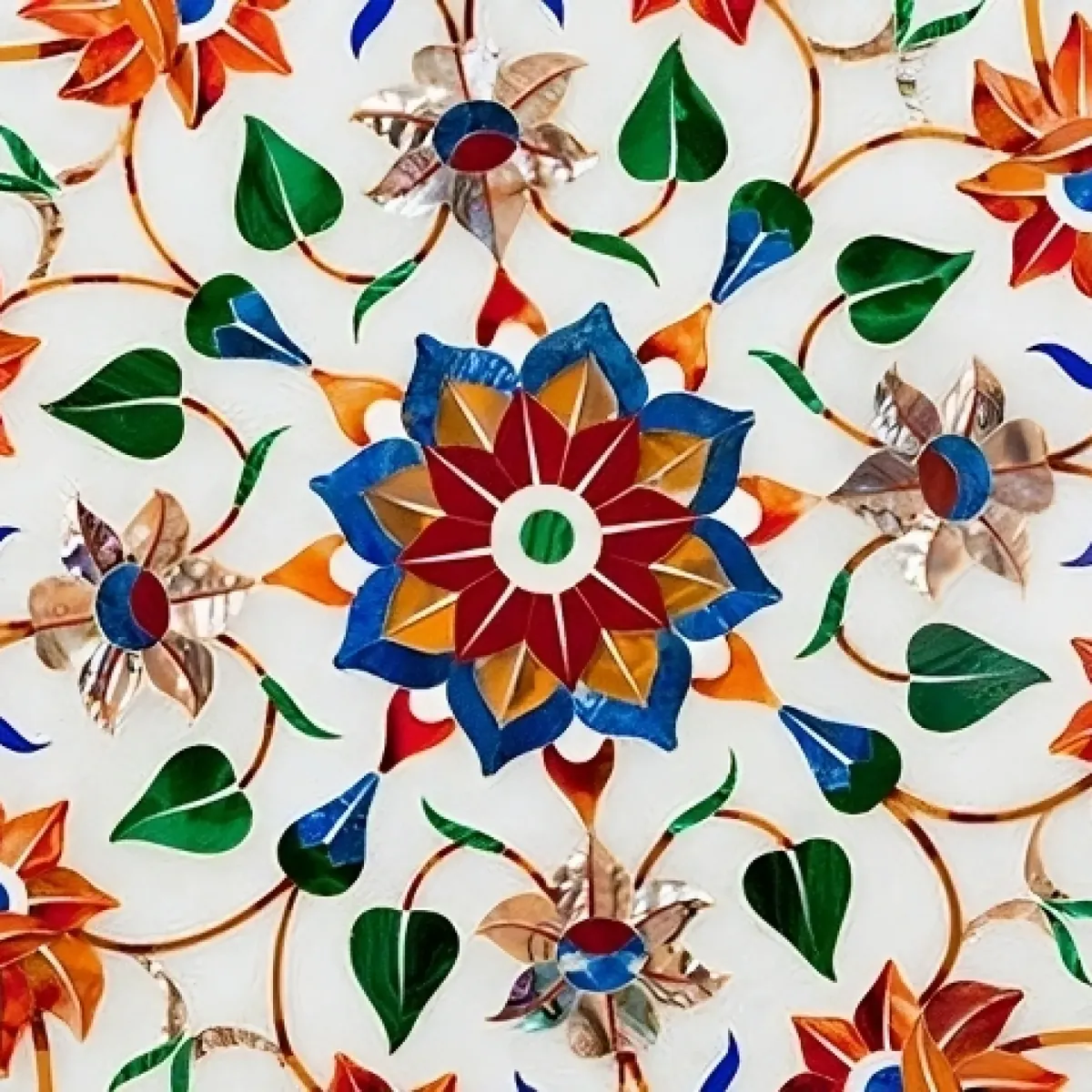
Marble Craft
Rooted in Mughal architecture traditions, marble craft flourished through monumental carving and decorative inlay work.
Fascinatingly, the same techniques used for the Taj Mahal’s pietra-dura continue in today’s artisan workshops.The craft produces idols, tabletops, décor pieces, vases, and architectural panels through hand-carving and stone inlay.It is valued for precision carving, luminous white stone, and intricate floral detailing.GI-tagged for preserving region-specific marble carving and inlay craftsmanship refined over centuries.
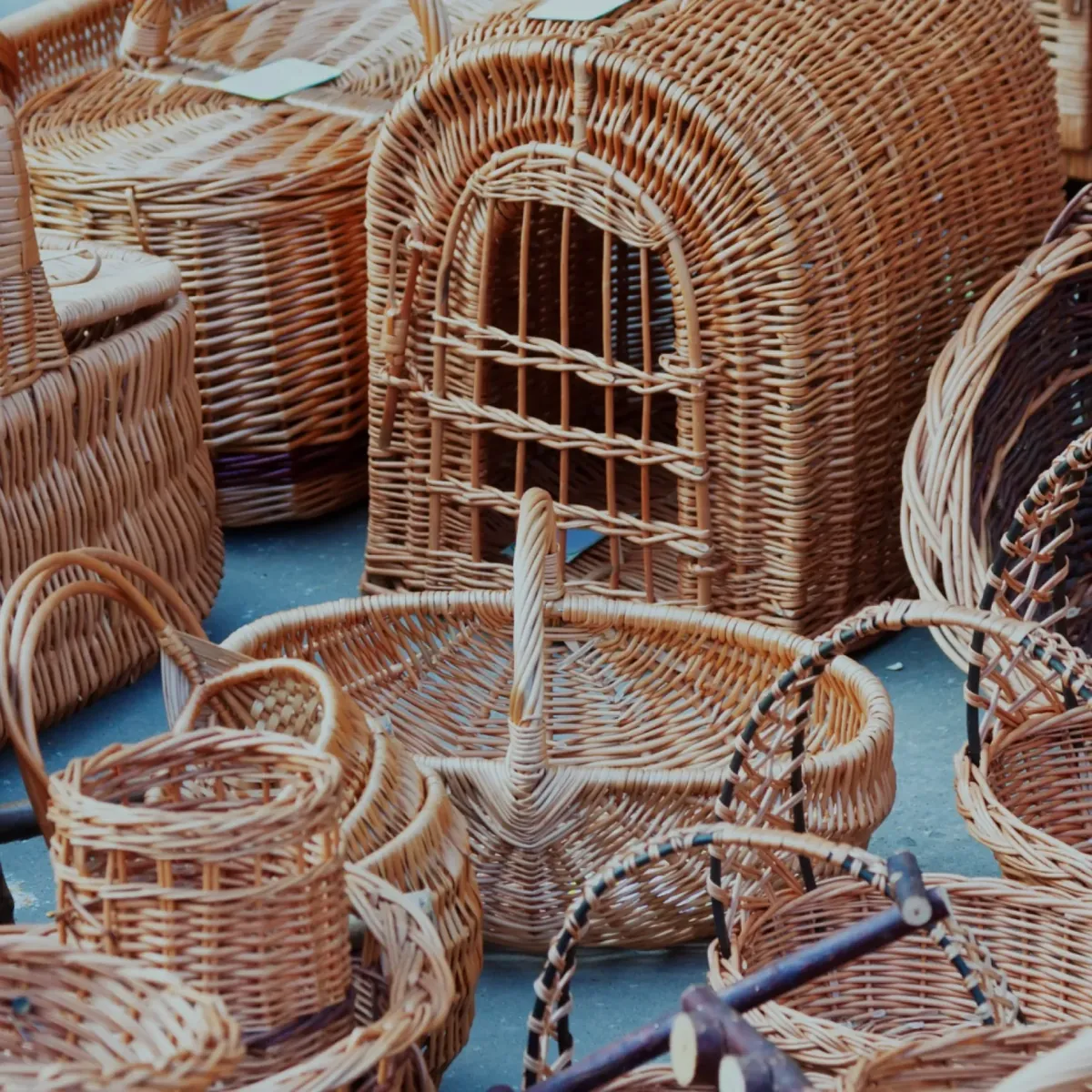
Bamboo Craft
Practiced since ancient tribal times, bamboo craft evolved as a sustainable way to create everyday tools and household essentials.
Fascinatingly, bamboo grows to maturity in just a few years, making it one of the world’s most renewable craft materials.The craft produces baskets, furniture, mats, lamps, and décor using splitting, weaving, and bending techniques.It is valued for strength, lightness, eco-friendly sourcing, and functional beauty.
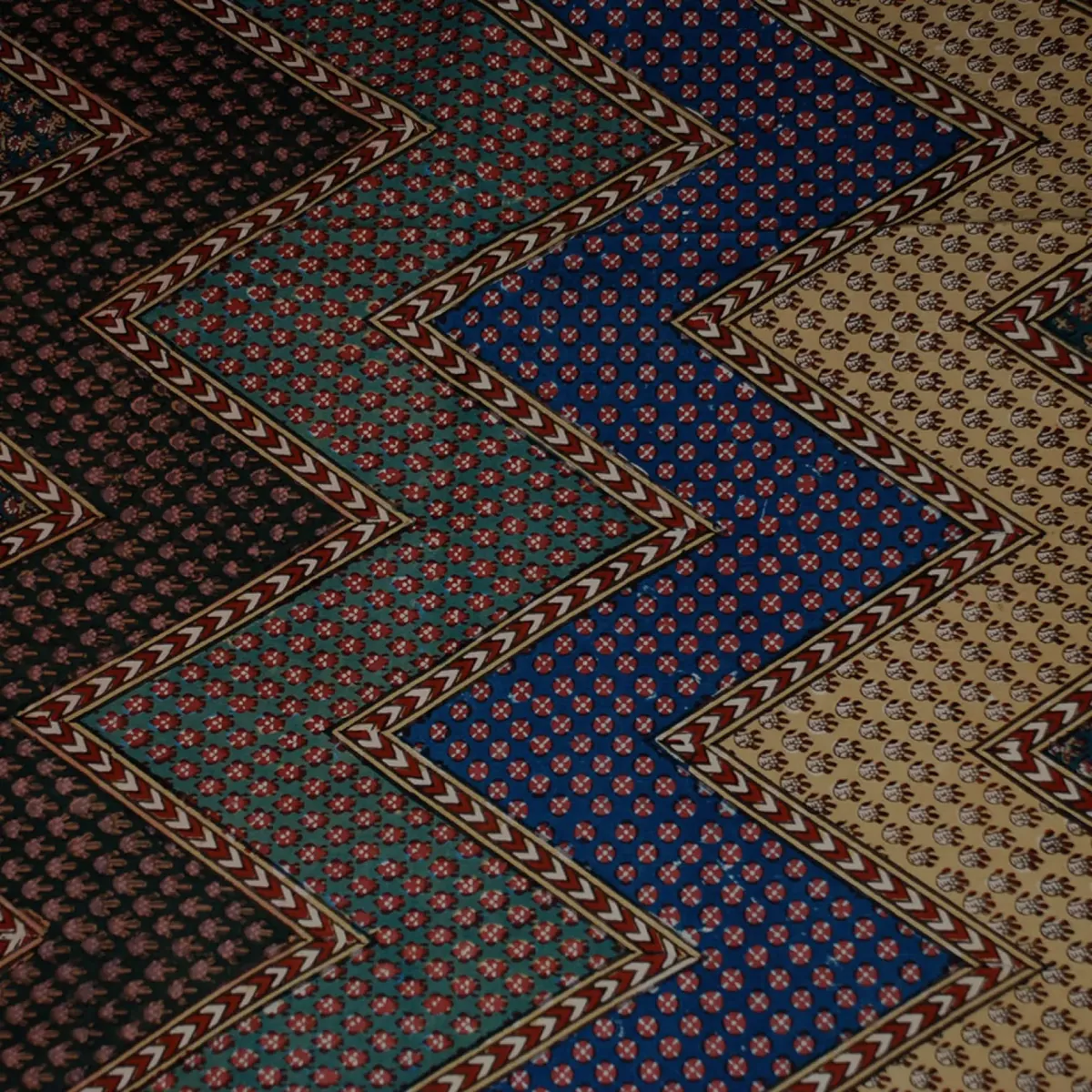
Bagru
Dating back over 300 years, Bagru printing developed when Chhipa printers settled and refined natural-dye block printing traditions.
Fascinatingly, the craft uses river soil and indigo baths to achieve its signature earthy reds and deep blues.The craft creates hand block-printed textiles featuring geometric and floral repeat patterns.It is valued for eco-friendly dyeing, precise block alignment, and earthy aesthetic.
GI-tagged for preserving its distinctive mud-resist printing method and region-specific natural dye process.
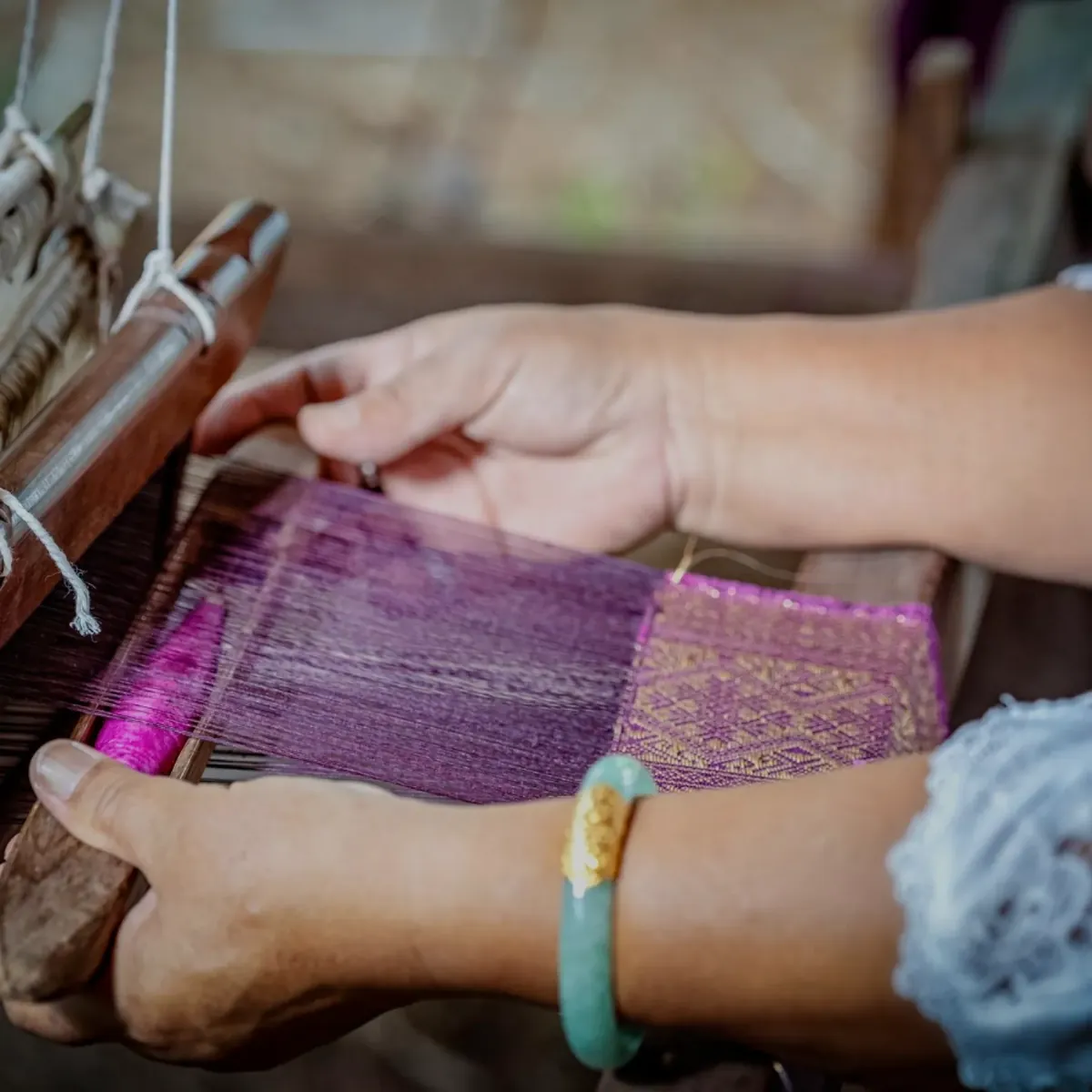
Handcrafted Textile
Rooted in India’s ancient weaving traditions, handcrafted textiles evolved as community-based skills passed through generations.
Fascinatingly, each region developed its own weave patterns, yarn preparations, and natural dye techniques.The craft produces sarees, shawls, yardage, and garments entirely on handlooms.
It is valued for slow production, sustainable fibers, and rich cultural storytelling through fabric.
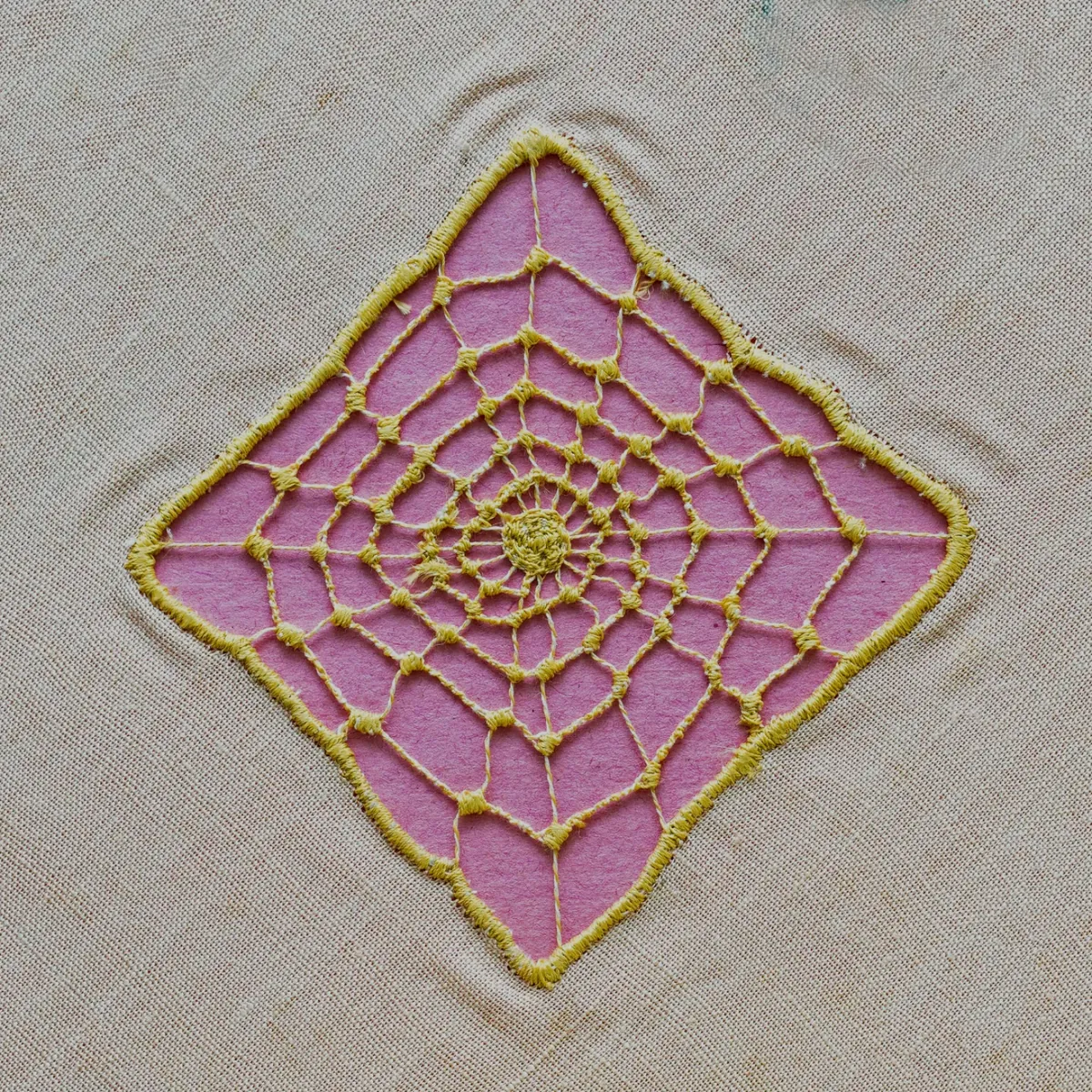
Applique
Dating back centuries in temple towns, appliqué evolved as ceremonial textile decoration for rituals and royal processions.
Fascinatingly, large appliqué canopies once traveled in chariot festivals dedicated to deities.
The craft creates vibrant textile panels, umbrellas, wall hangings, lamp shades, and home décor through layered fabric stitching.It is valued for bold color contrasts, precise hand-cut motifs, and symbolic designs.GI-tagged for protecting the distinctive temple-linked appliqué techniques preserved by artisan families.
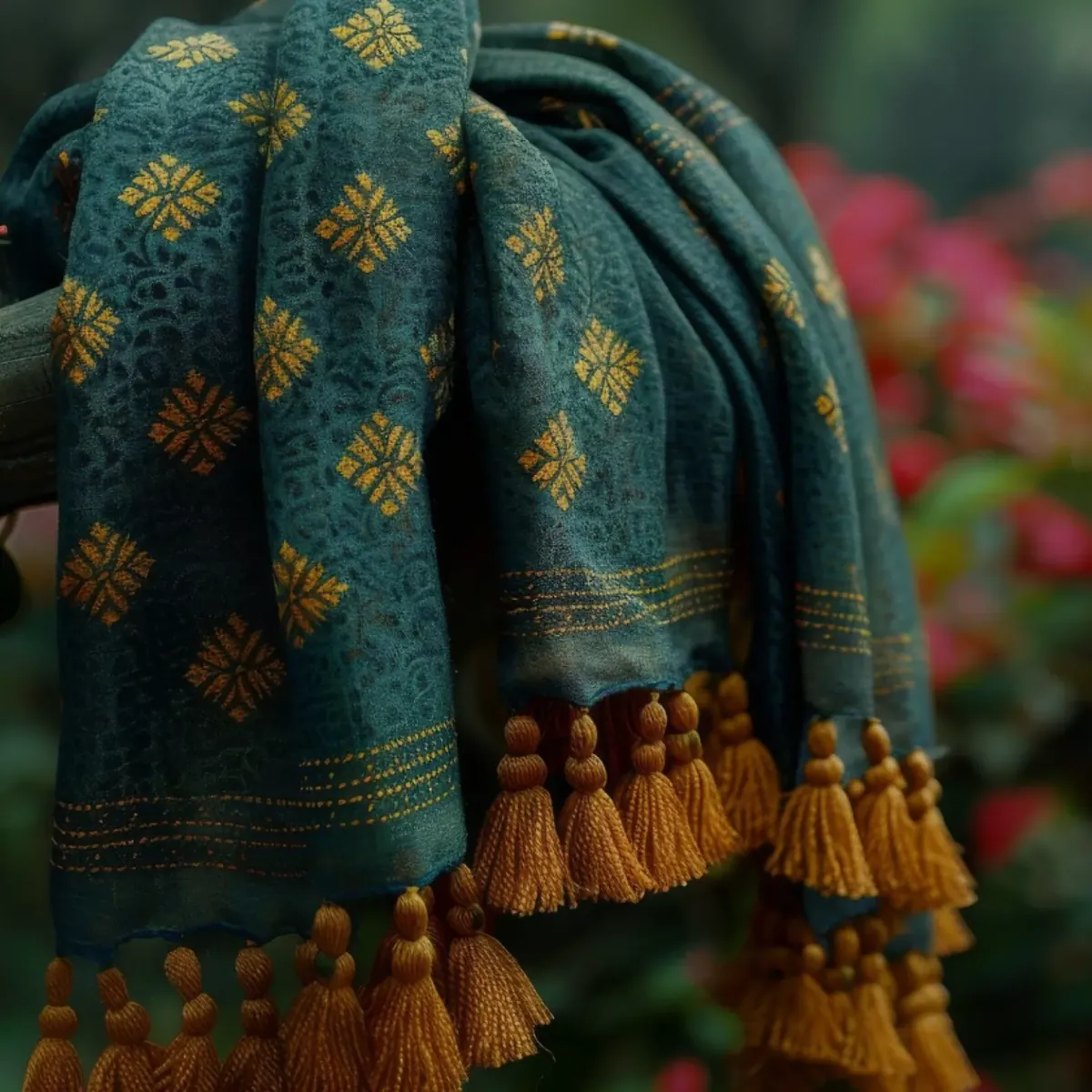
Handwoven
Rooted in India’s ancient loom traditions, handwoven textiles developed as community crafts expressing regional identity and heritage.
Fascinatingly, many classic weaves are still produced on pit looms using techniques unchanged for centuries.The craft creates sarees, shawls, fabrics, and garments entirely woven by hand.
It is valued for artisanal precision, sustainable fibers, and non-mechanized production.
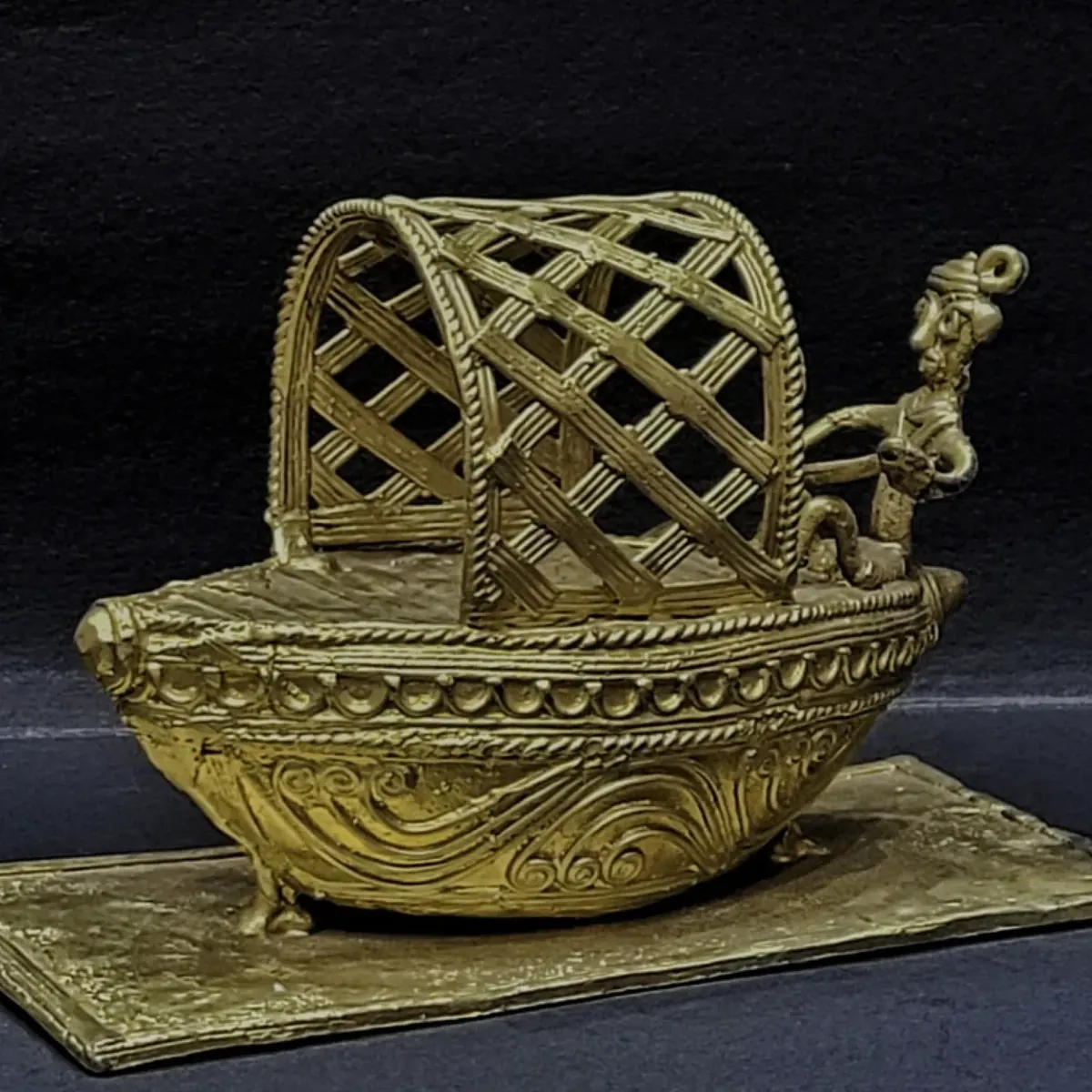
Dokra
Tracing back over 4,000 years to the Indus Valley era, Dokra evolved as one of the world’s oldest surviving metal casting traditions.
Fascinatingly, each piece is made using the lost-wax method, so every sculpture is entirely one-of-a-kind.The craft produces brass figures, tribal idols, lamps, and décor with primitive yet expressive forms.It is valued for raw textures, symbolic motifs, and completely handmade casting processes.
GI-tagged for safeguarding its ancient lost-wax casting technique unique to regional tribal communities.
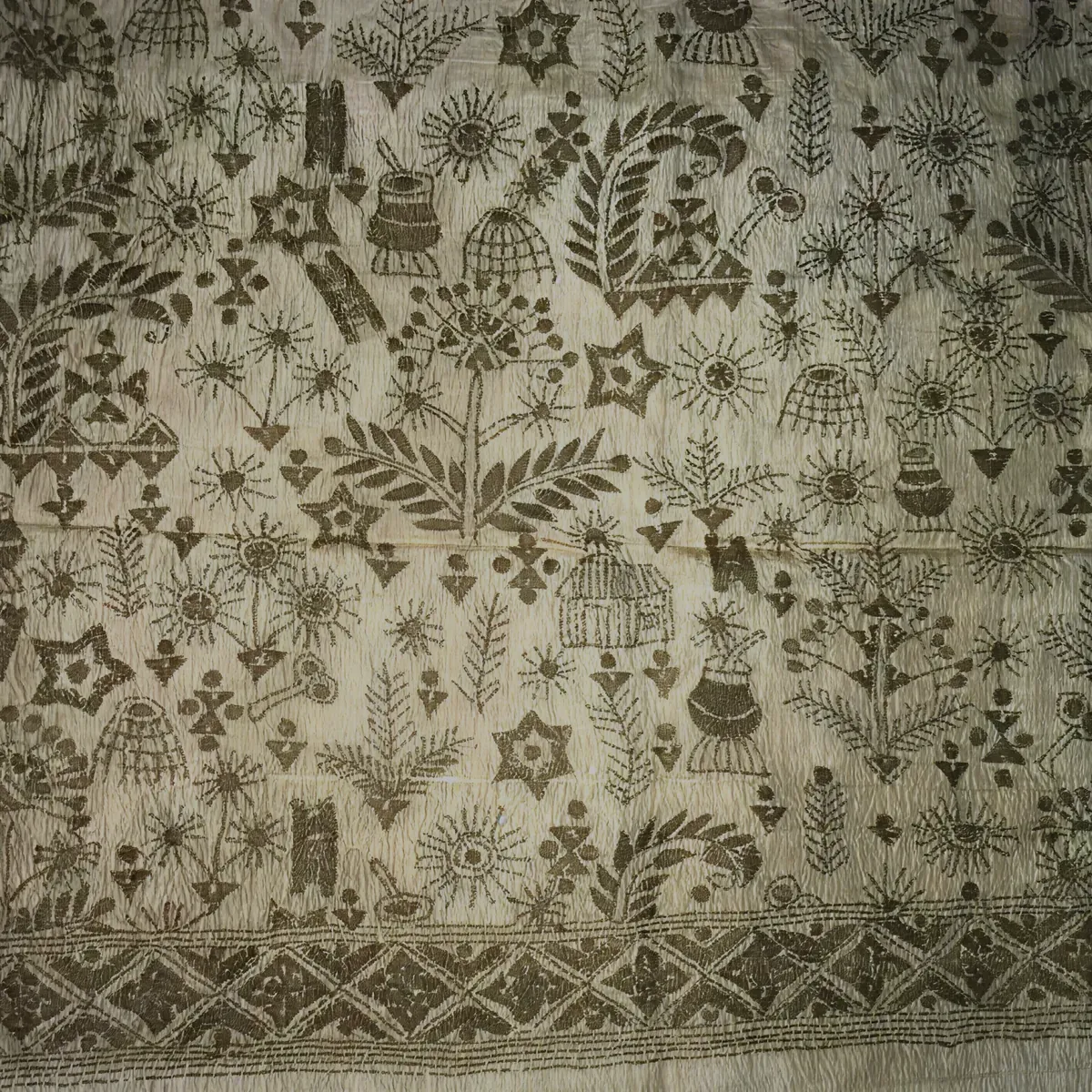
Kantha
Originating as a domestic recycling tradition, Kantha evolved when rural women layered old cloth and stitched stories into everyday textiles.
Fascinatingly, freehand running stitches form intricate patterns without any drawn guidelines.
The craft creates quilts, bedcovers, throws, cushion covers, and wall hangings.
It is valued for upcycled materials, narrative embroidery, and distinctive textured surfaces.
GI-tagged for preserving Bengal’s heritage hand-stitch embroidery techniques passed down through generations.
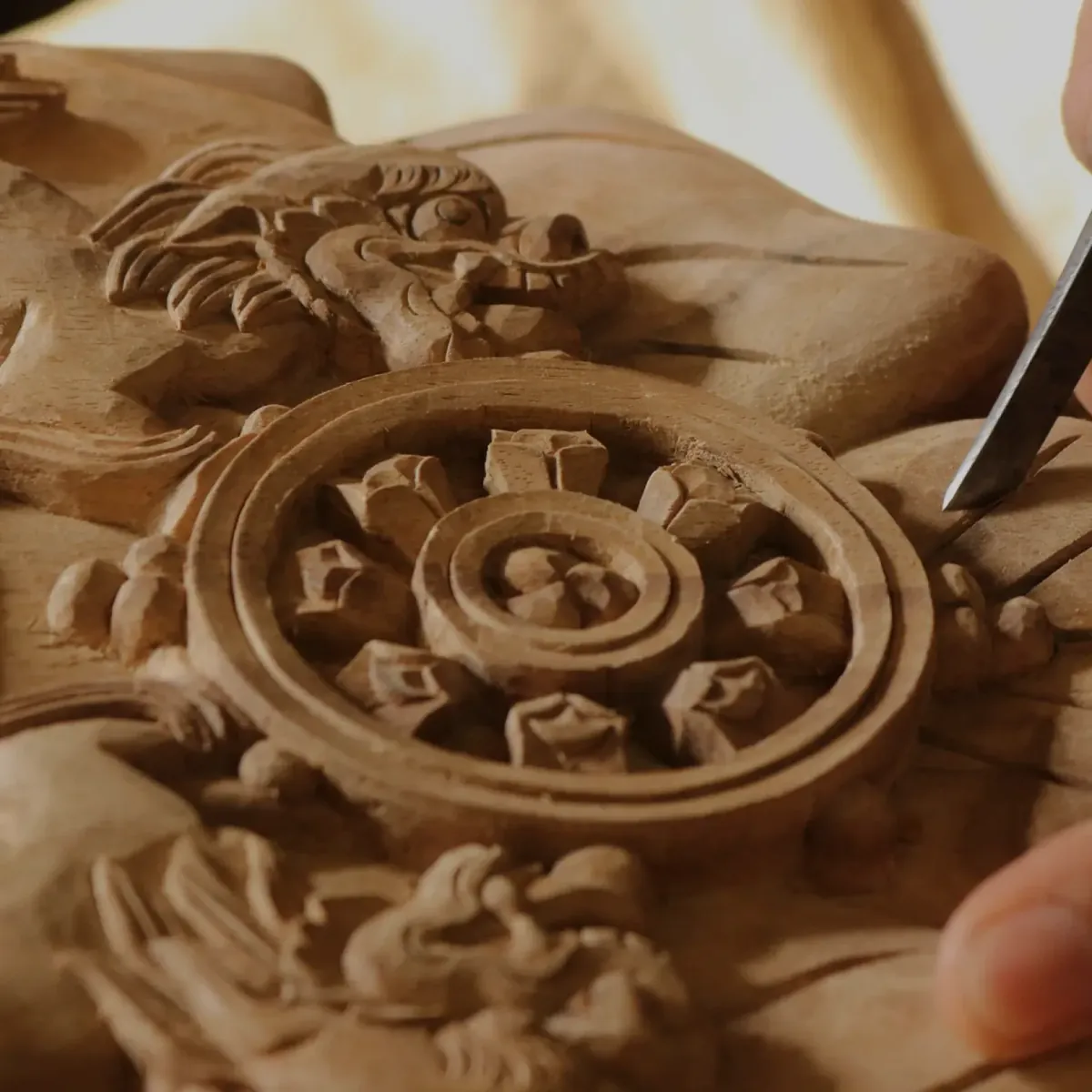
Wood Carving
Tracing back to ancient temple architecture, wood carving evolved as a vital decorative craft in palaces and shrines.
Fascinatingly, entire panels are hand-carved without machines using only traditional chisels.
The craft produces furniture, statues, wall panels, doors, and décor pieces.
It is valued for deep-relief detailing, durable hardwood use, and skilled hand chiseling.
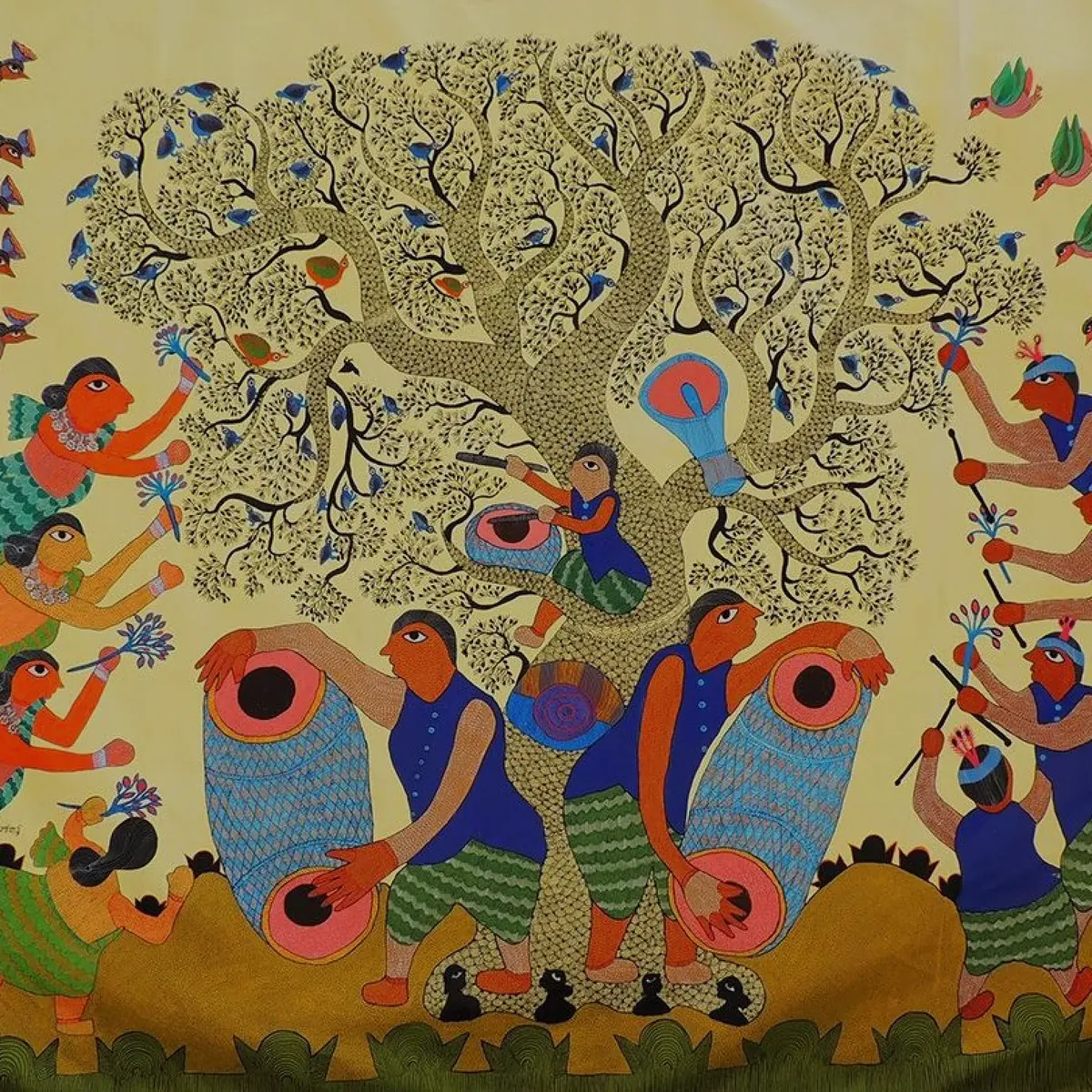
Gond Painting
Rooted in ancient tribal storytelling, Gond painting evolved as a way to visually narrate myths, nature, and daily life.
Fascinatingly, images are built entirely from rhythmic dot and line patterns known as “digna.”
The craft creates bold narrative paintings using natural colors and symbolic motifs.
It is valued for its distinctive filling techniques, vibrant palettes, and cultural storytelling.
GI-tagged for preserving its indigenous visual language and community-based painting traditions.
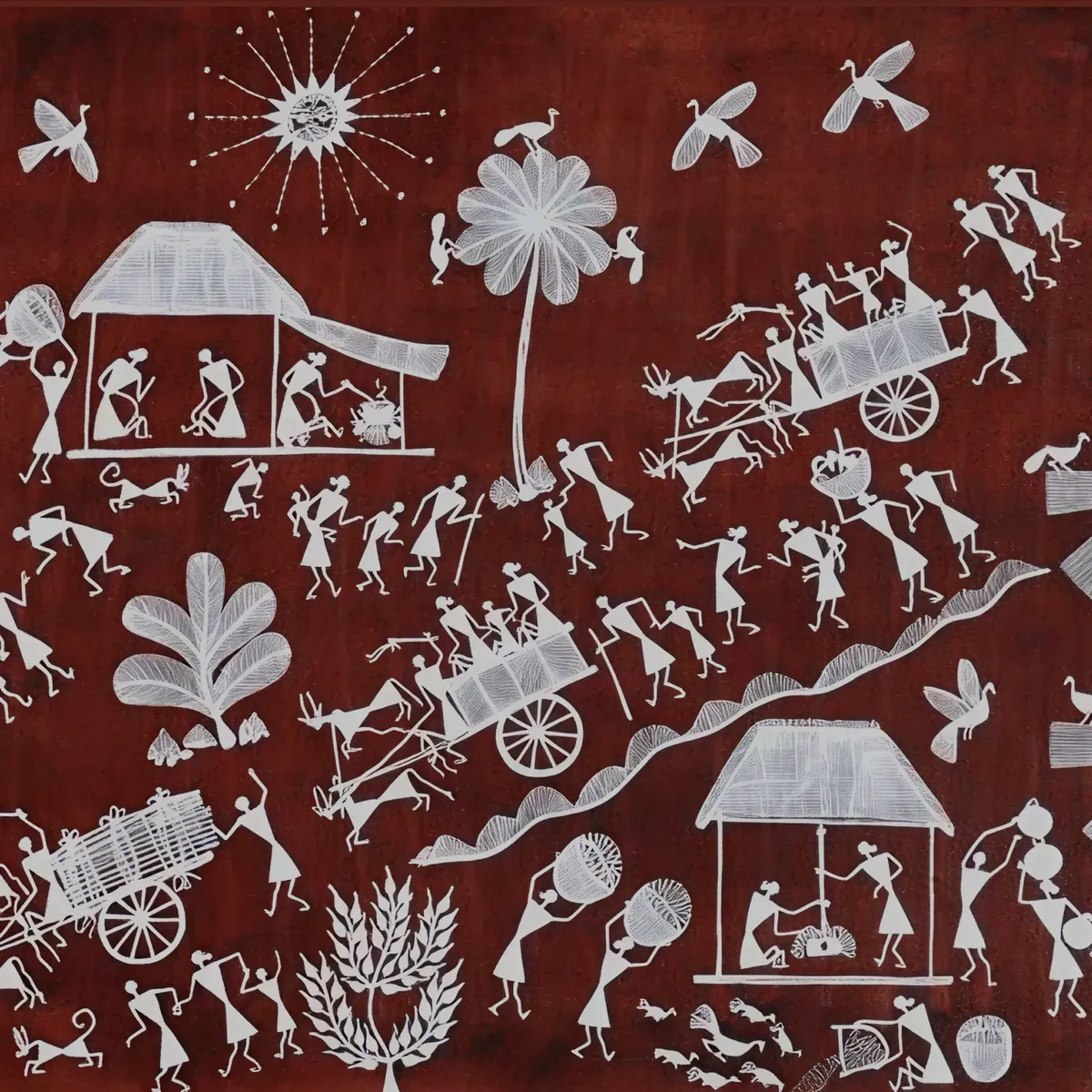
Warli Craft
Dating back over 2,500 years, Warli painting evolved as a ritual art to depict harmony between humans and nature.
Fascinatingly, its figures use simple geometric forms such as circles, triangles, and lines to narrate complex life scenes.The craft creates murals and artworks using white pigment on earthy backgrounds.It is valued for minimalist symbolism, tribal storytelling, and natural material use.
GI-tagged for preserving its unique geometric visual language and indigenous painting tradition.
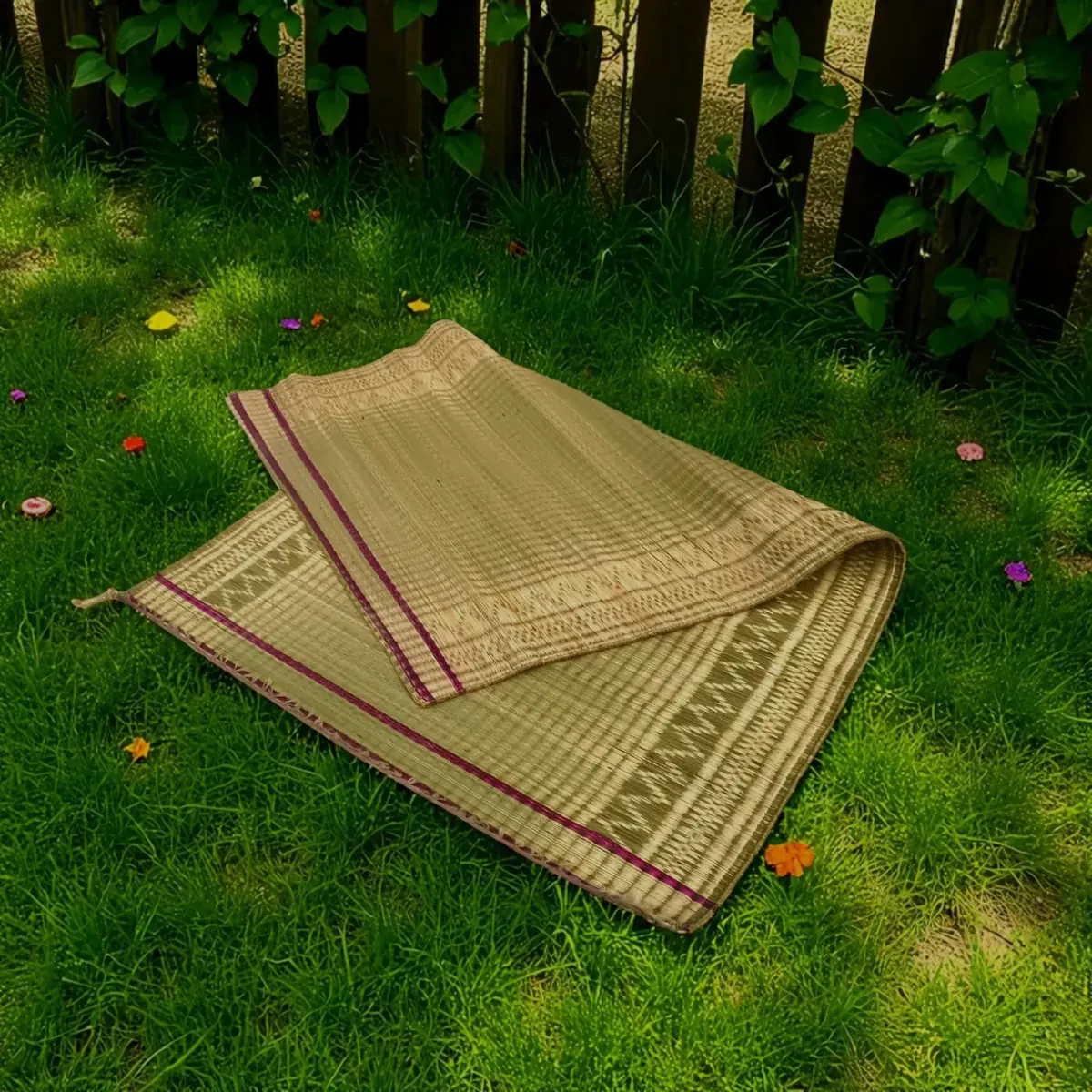
Madurkathi Grass Craft
Originating in rural Bengal, Madurkathi craft evolved as a household weaving tradition for daily floor coverings.
Fascinatingly, each mat is handwoven from sun-dried madur grass that naturally cools rooms.
The craft produces mats, rugs, and seating covers using tightly woven geometric patterns.
It is valued for eco-friendly materials, durability, and breathable comfort.GI-tagged for protecting its region-specific madur grass weaving techniques passed through artisan families.
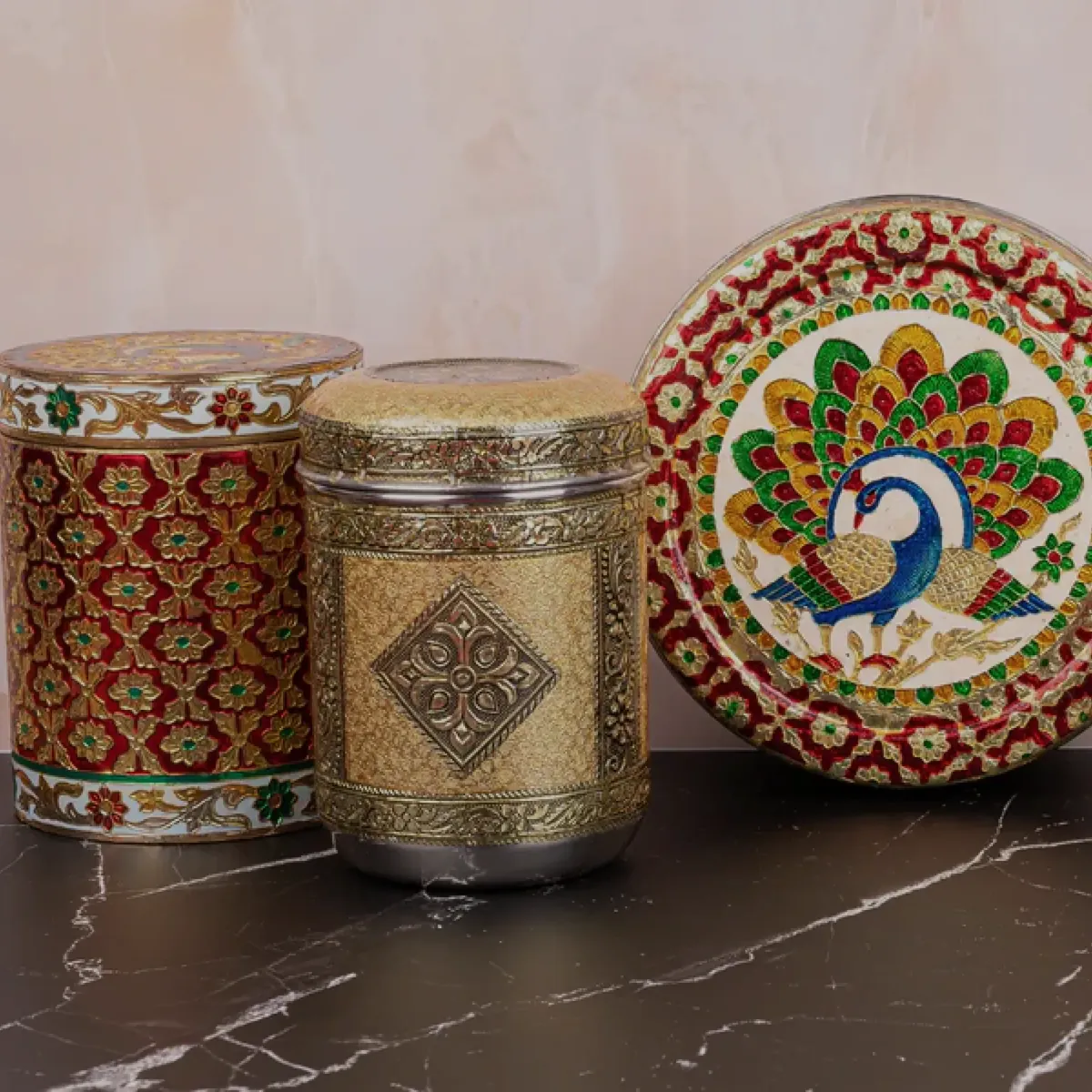
Meenakari
Developed under Mughal patronage, Meenakari evolved as a luxury jewelry and metal-decor art combining enamel with intricate craftsmanship.
Fascinatingly, artisans fire colorful glass enamel onto engraved metal surfaces to create jewel-like finishes.The craft produces jewelry, bowls, boxes, and décor items with vibrant floral and figurative designs.It is valued for luminous colors, precision detailing, and rich ornamental aesthetics.
GI-tagged for preserving its distinctive hand-enameling techniques refined through generations.
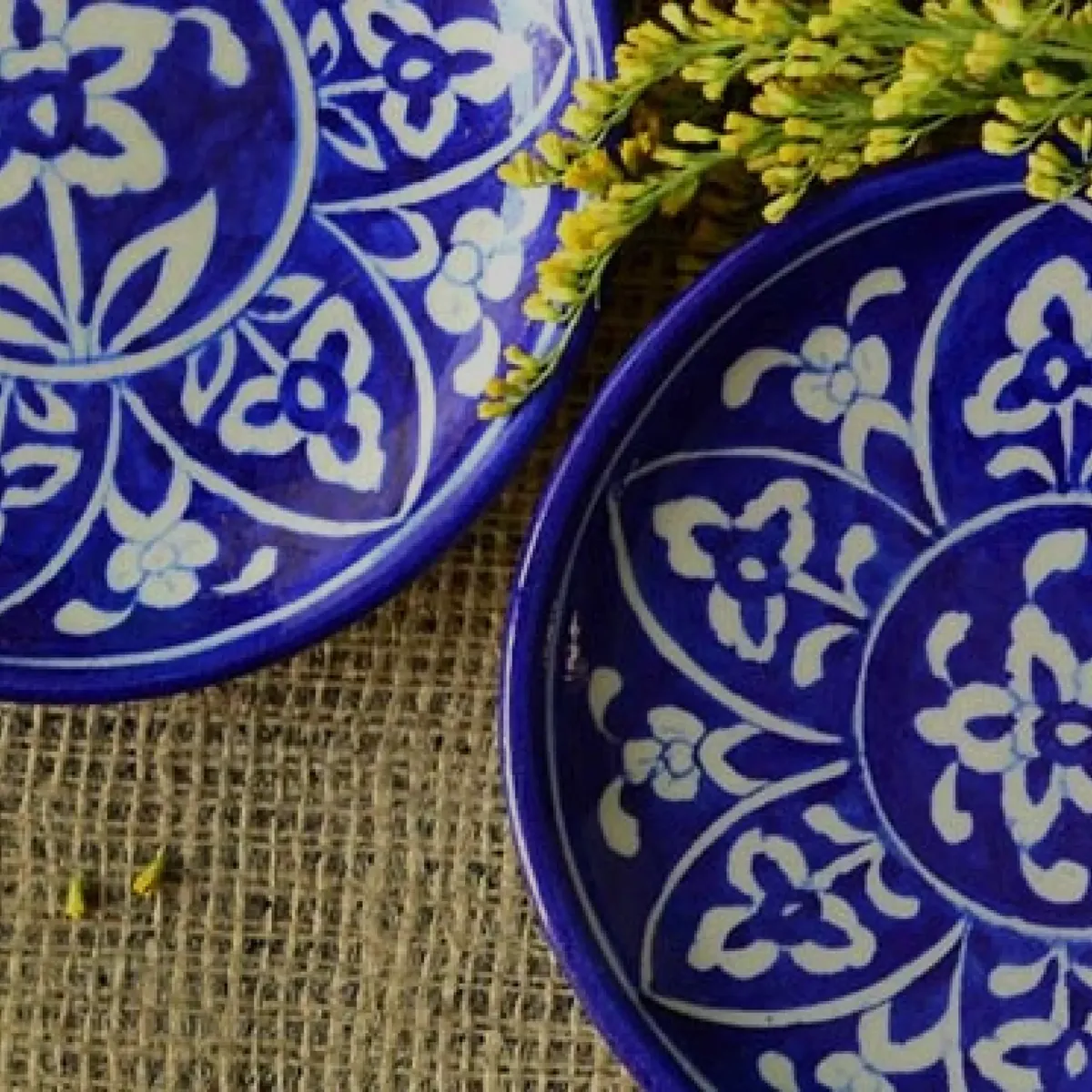
Blue Pottery
Introduced via Persian influence during the Mughal period, Blue Pottery developed as a distinctive low-temperature ceramic tradition.
Fascinatingly, it uses a unique quartz-based body instead of clay, giving it its glassy finish and vibrant blue tones.The craft produces tiles, vases, bowls, and décor pieces with floral and geometric motifs.It is valued for its glossy surface, striking cobalt colors, and hand-painted detailing.GI-tagged for protecting its unique quartz composition techniques and hand-painted ceramic style.
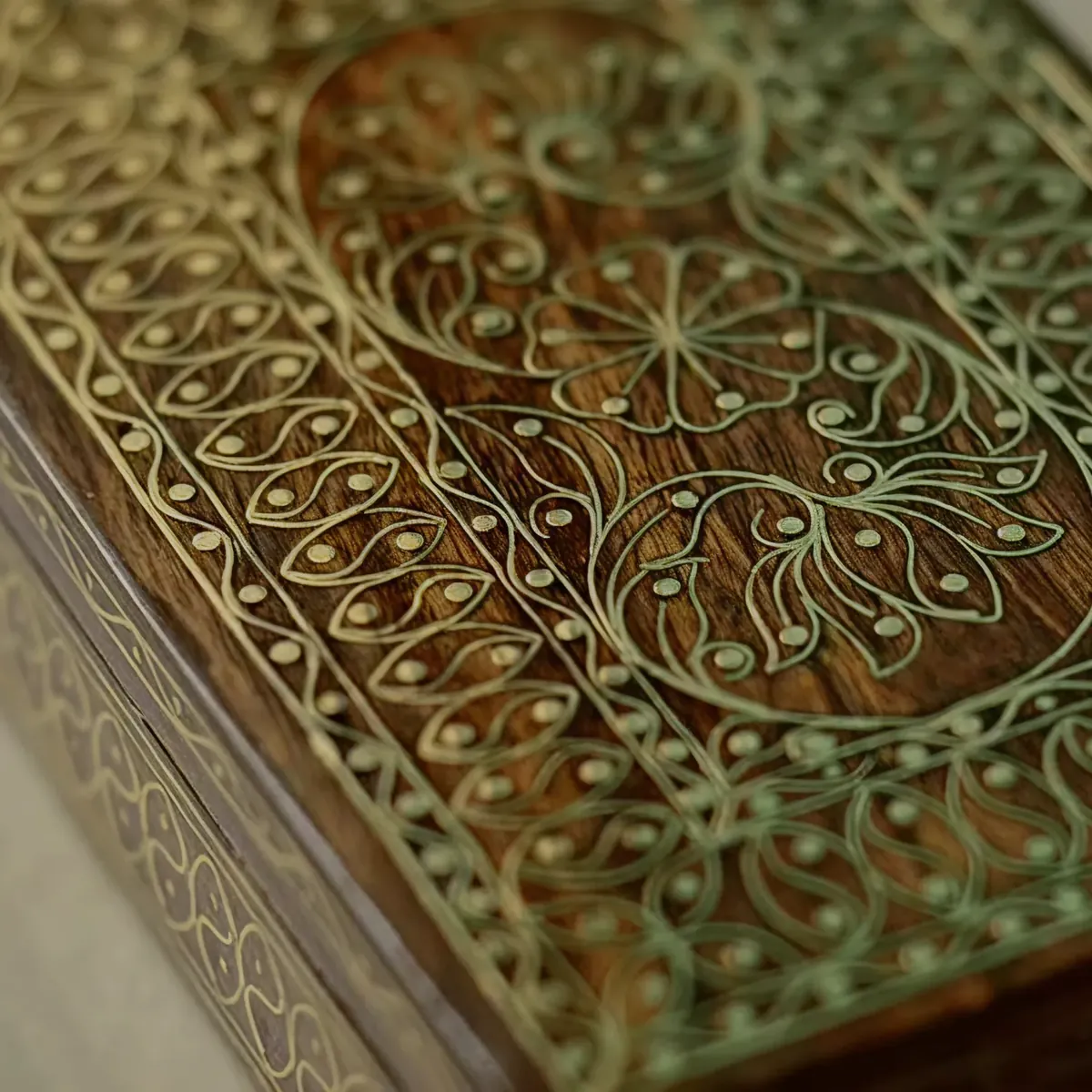
Tarkashi (metal Inlay Craft)
Developed in royal courts of central India, Tarkashi evolved as a decorative metal inlay tradition for palace and temple objects.
Fascinatingly, fine brass or copper wires are hammered by hand into etched wood and metal surfaces.The craft produces boxes, doors, panels, furniture accents, and décor items with geometric patterns.It is valued for precision inlay work, durable finishes, and elegant surface ornamentation.GI-tagged for preserving its region-specific wire inlay techniques practiced by hereditary artisan families.
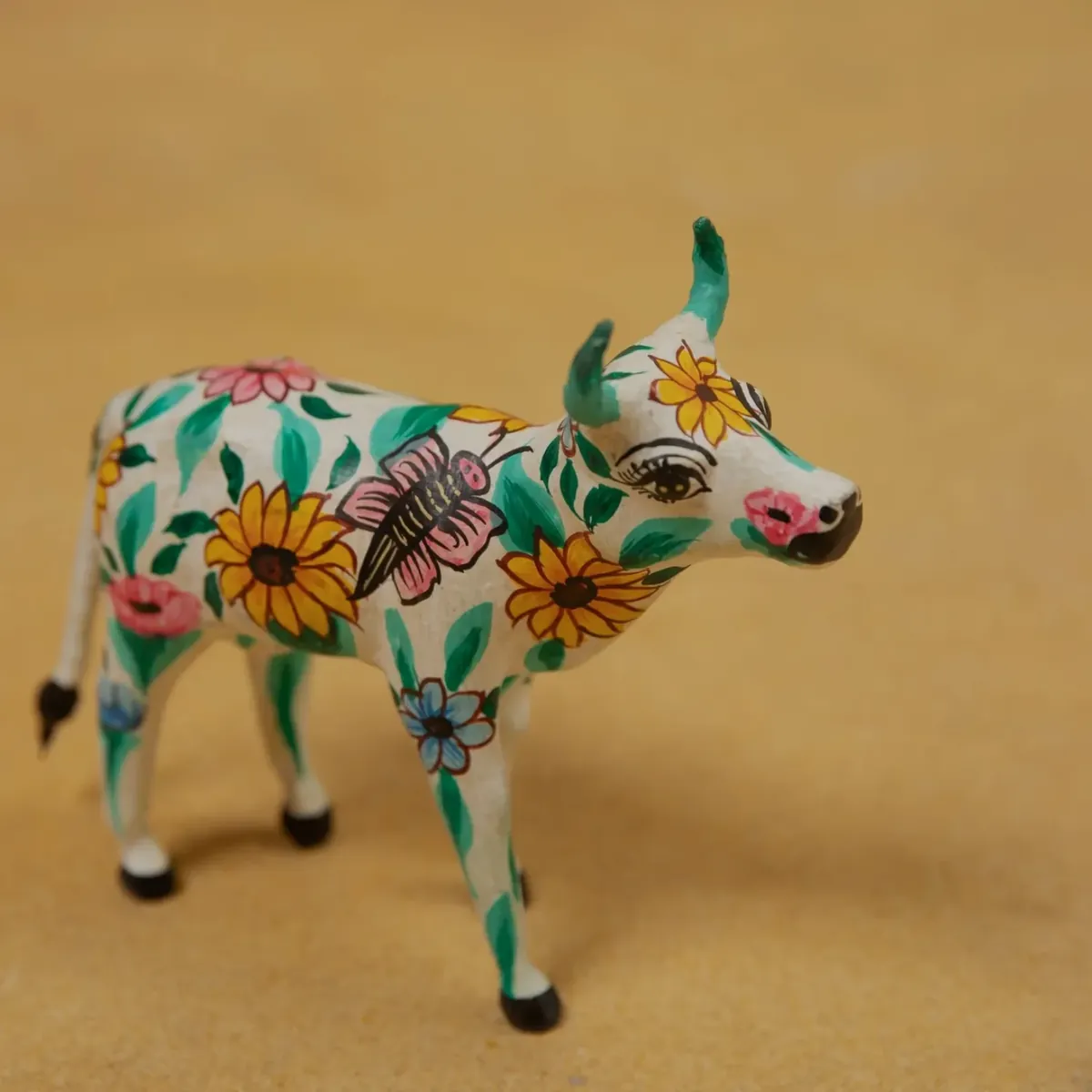
Paper Mache
Introduced during the Mughal era, paper mache developed as a decorative craft combining papier pulp with Kashmiri artistry.
Fascinatingly, each object is hand-molded from recycled paper pulp and painted in intricate motifs layer by layer.The craft creates boxes, vases, ornaments, trays, and festive décor pieces.
It is valued for lightweight strength, minute detailing, and vibrant hand-painted finishes.
GI-tagged for preserving its distinctive papier pulp molding and hand-painting traditions.
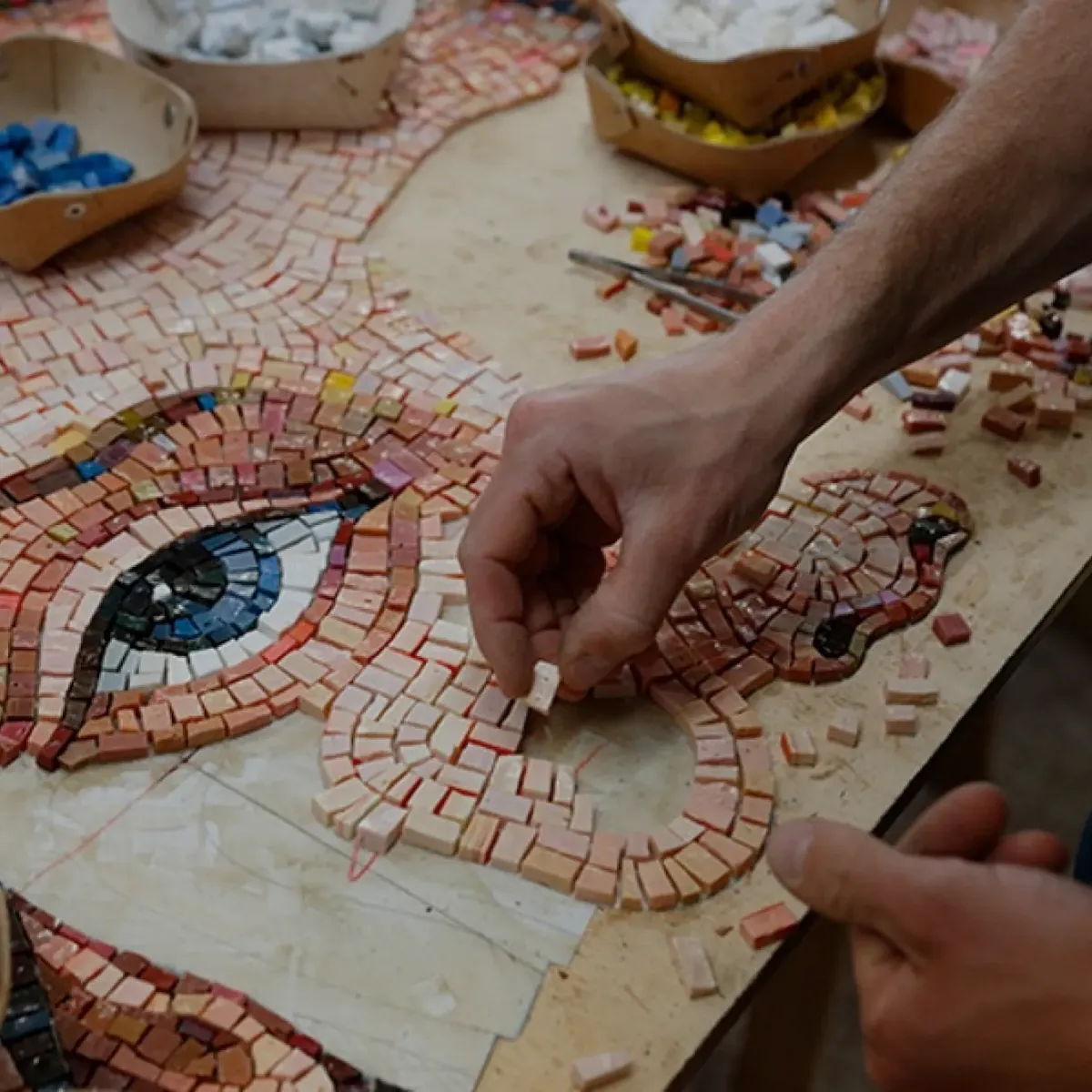
Mosaic Work
Rooted in ancient architectural decoration, mosaic work evolved as a craft of assembling small colored stone, glass, and tile pieces into patterns.
Fascinatingly, each design is composed piece by piece entirely by hand without pre-cast templates.
The craft produces tabletops, wall panels, flooring designs, and home décor surfaces.
It is valued for precision setting, durable compositions, and richly patterned visual depth.
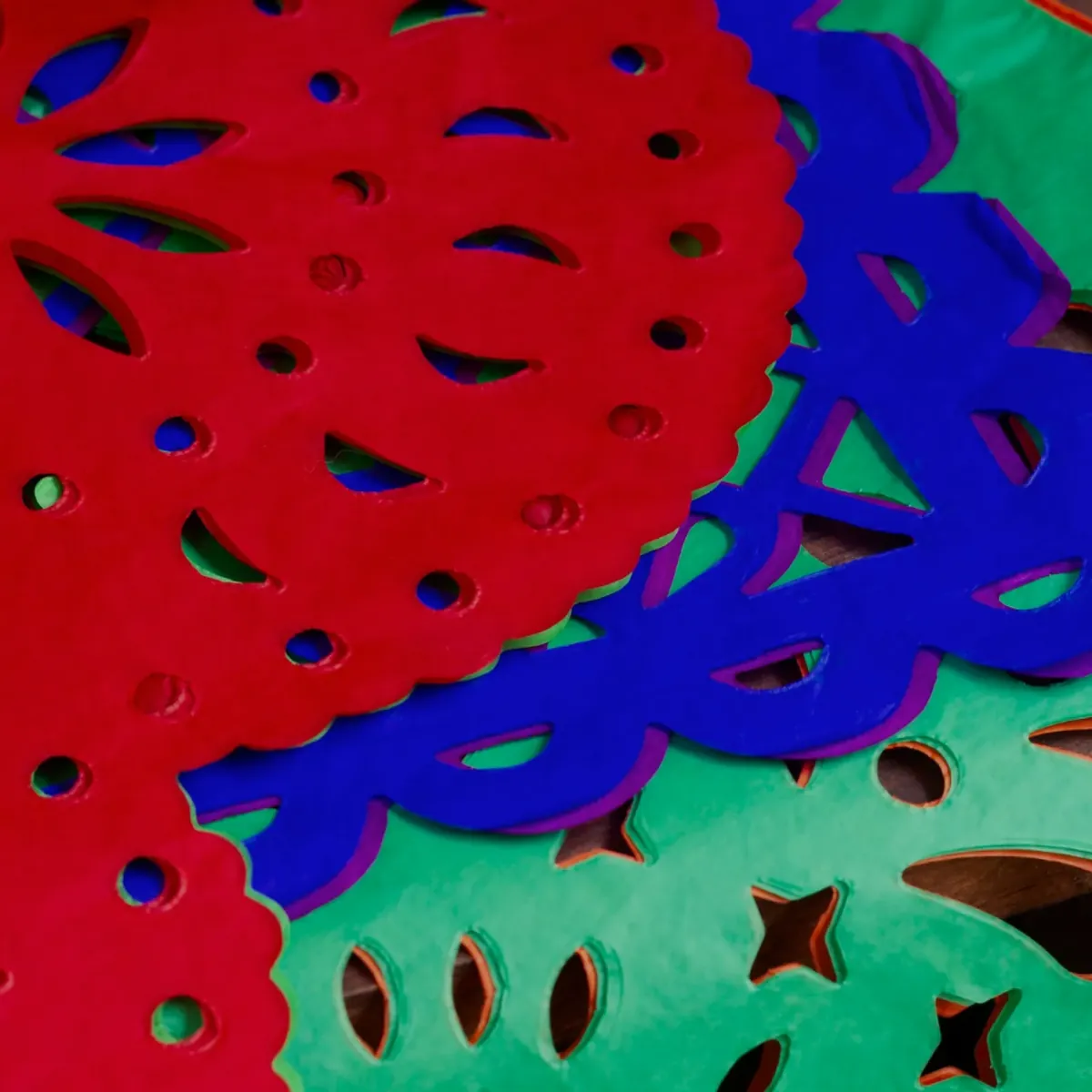
Paper Craft
Rooted in ancient manuscript traditions, handmade paper craft revived in Rajasthan to sustain eco-friendly recycling practices.
Fascinatingly, cotton rags are pulped, sun-dried on screens, and textured naturally without chemicals.The craft produces stationery, journals, gift wraps, and décor using fully hand-sheeted paper. It is valued for sustainability, rich textures, and durability ideal for artistic printing and writing.
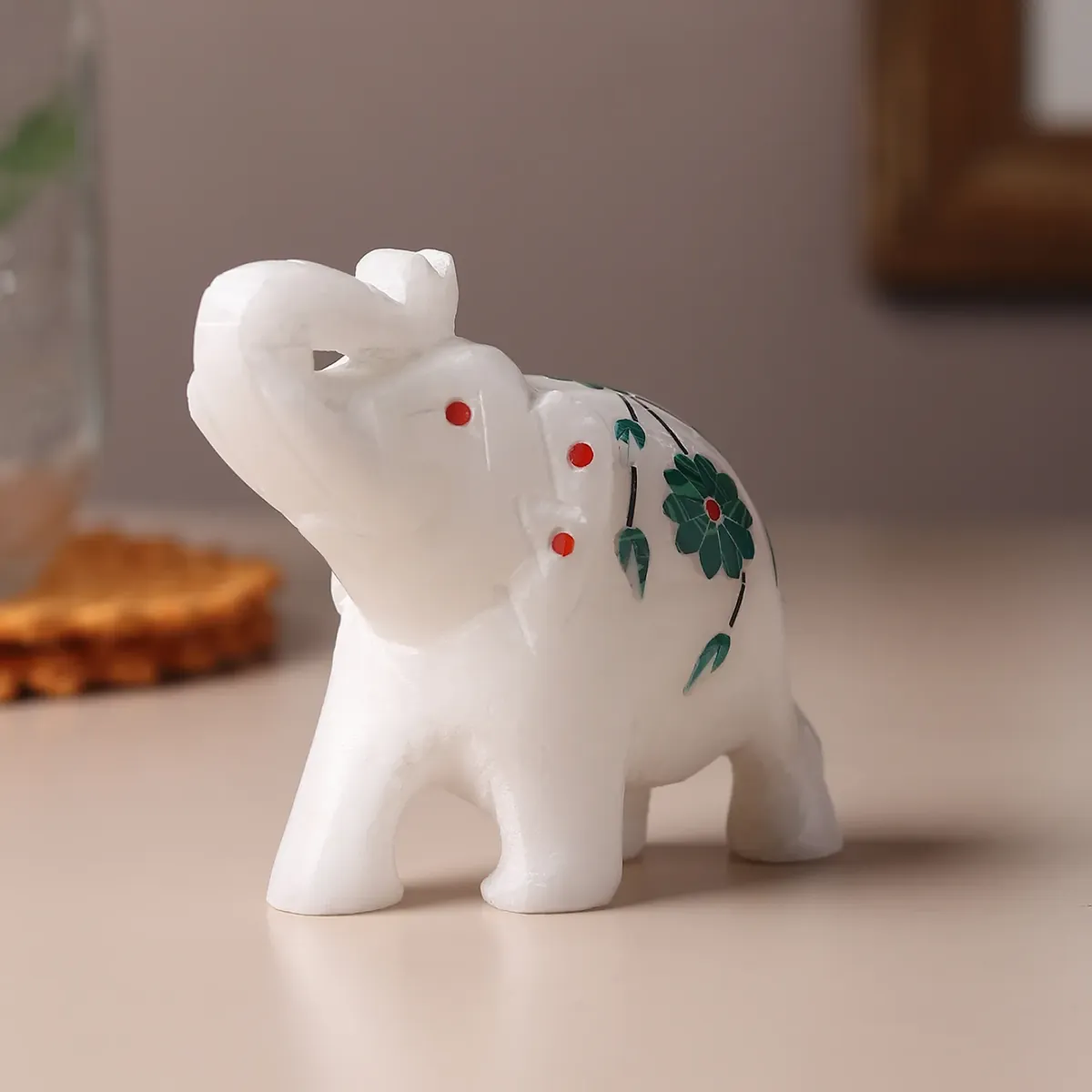
Marble Inlay
Evolving from Mughal architectural traditions, marble inlay gained prominence through the decorative work seen in historic monuments.
Fascinatingly, semi-precious stones are hand-cut into hairline shapes and fitted into marble without adhesives. The craft creates tabletops, wall panels, vases, and décor pieces featuring floral and geometric designs. It is valued for extreme precision, luminous finishes, and meticulous craftsmanship. GI-tagged for protecting its heritage pietra-dura inlay techniques passed through artisan lineages.
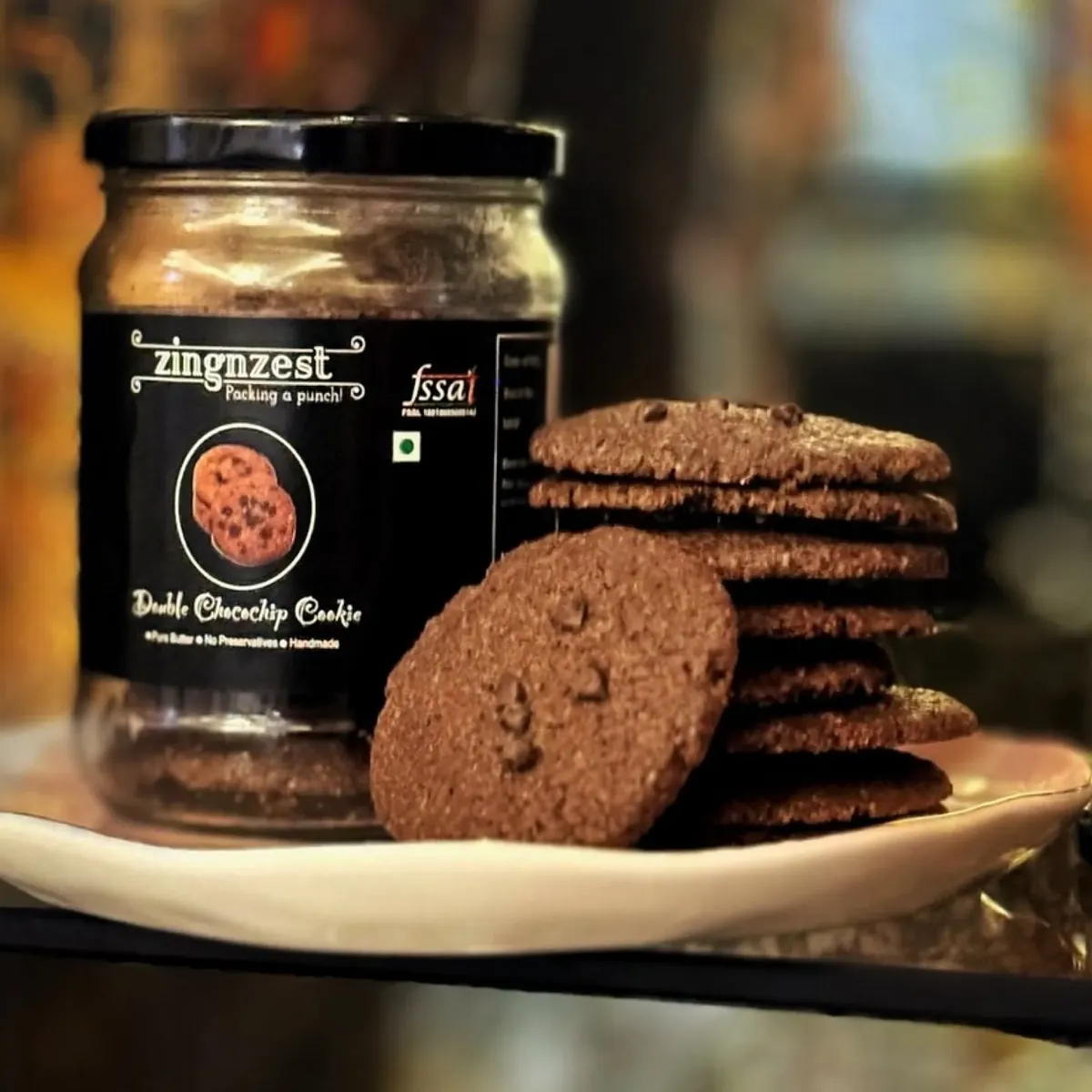
Zingnzest
ZingnZest is a home-grown food brand dedicated to creating wholesome, flavour-rich snacks made with real, clean ingredients. Their range celebrates traditional Indian superfoods and mindful snacking - from nutritious Nachni Crackers and Dry Fruit Laddoos to light and crunchy Poha Makhana Namkeen and bold Peri Peri Makhana.
ZingnZest also brings indulgence to the table with their delicious Walnut Cookies, Oatmeal Raisin Cookies, and Choco Chip Cookies, each baked with care for a perfect balance of taste and quality.